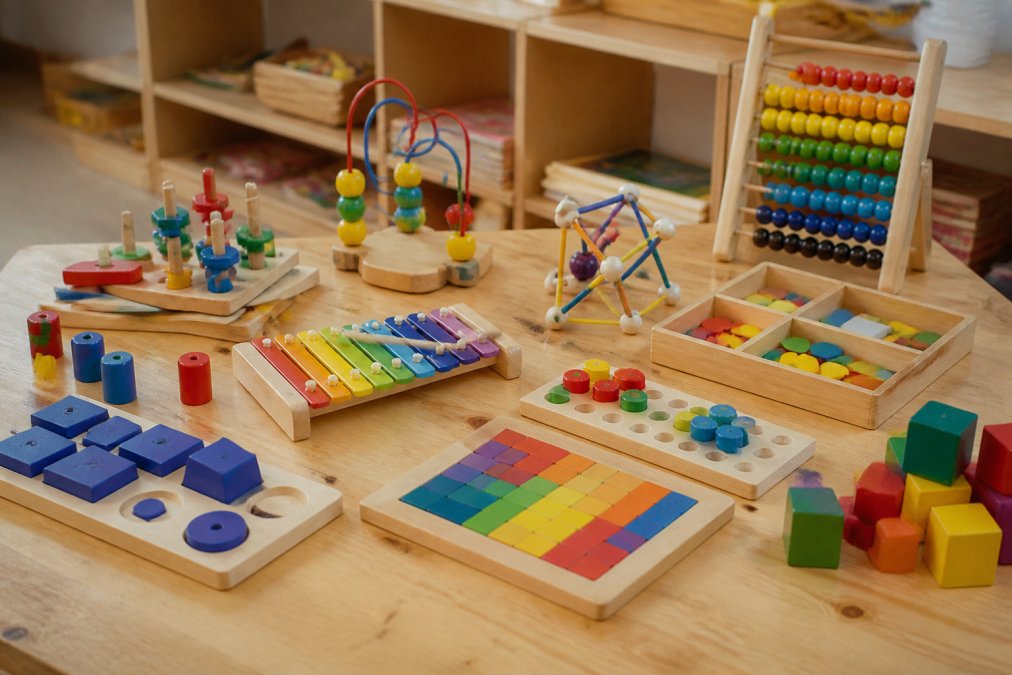
 listicle
Affordable Educational Toys for Schools: 2026 Guide
Table of Contents
- Why Educational Toys for Schools Deliver Real Learning Outcomes
- STEM Learning Materials for Primary Schools
- Montessori-Inspired Learning Materials and Sensory Play Tools
- Critical Thinking and Logic Games for Pre-School and Primary Classes
- Wholesale Educational Toys for Schools: A Bulk Purchasing Guide
- Curriculum Alignment and Budget-Friendly DIY Alternatives
- How to Choose the Right Affordable Educational Toys for Schools
- Conclusion
Last Updated: August 15, 2026
Why Educational Toys for Schools Deliver Real Learning Outcomes
Educational toys transform abstract concepts into hands-on experiences, accelerating developmental milestones that traditional rote instruction misses. Children who engage with physical, manipulative materials develop problem-solving skills, spatial awareness, and foundational literacy and numeracy faster than those limited to textbooks alone.
At MasterKids, we offer a curated selection of age-appropriate, high-quality resources that deliver measurable learning outcomes without breaking procurement budgets. According to UNICEF's guidance on early childhood education and play, structured play with educational materials supports cognitive development, social skills, and emotional regulation across all early childhood age groups.
STEM Learning Materials for Primary Schools
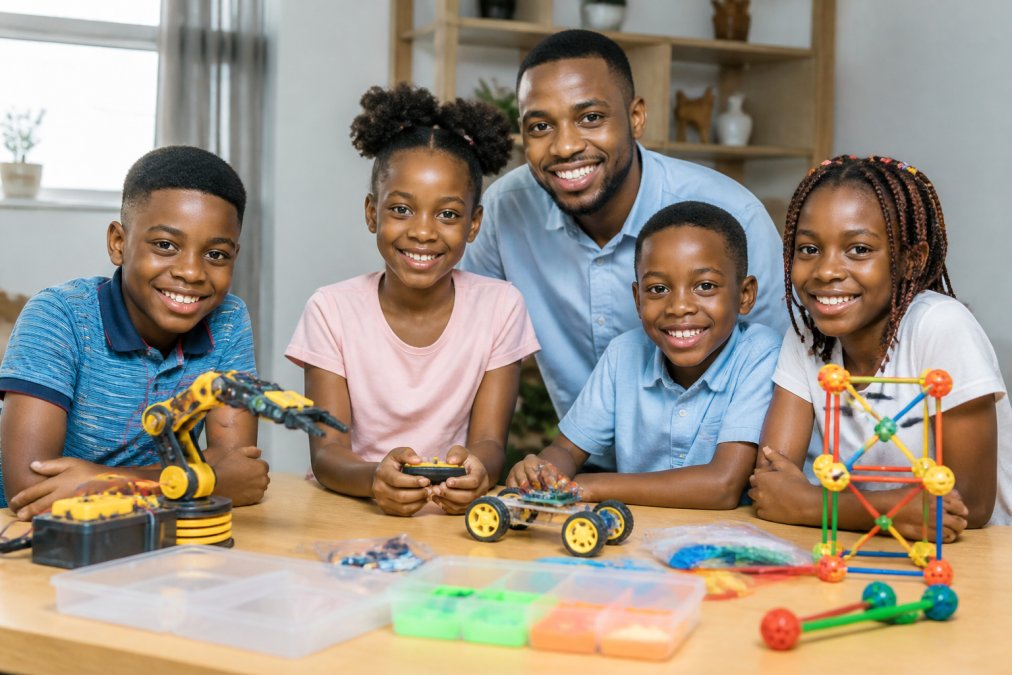
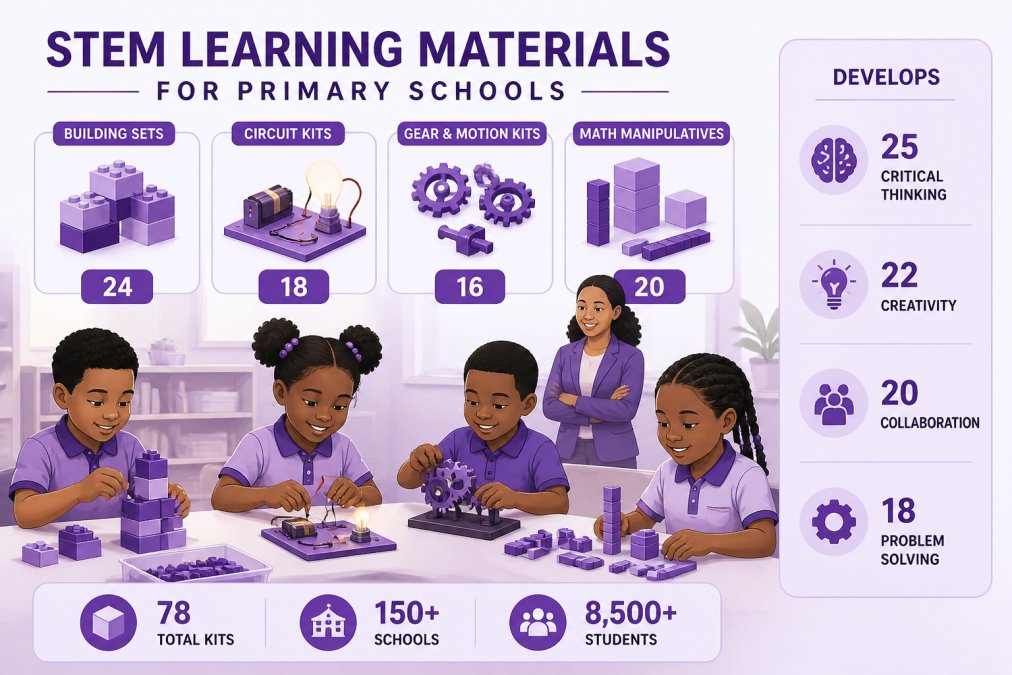
STEM learning materials give children a concrete way to explore science, technology, engineering, and mathematics before those subjects become abstract. The most effective resources require children to make decisions, produce visible results, and enable collaborative play, which builds communication skills and logical reasoning.
Building Blocks and Construction Sets
Building blocks and construction sets are among the most durable and pedagogically versatile tools for primary classrooms, supporting spatial awareness, fine motor coordination, and early engineering thinking simultaneously.
For schools, durability and non-toxic materials are critical. Standard wooden unit blocks, interlocking plastic bricks, and magnetic tile sets all qualify, provided they carry documentation confirming compliance with the Standards Organisation of Nigeria's consumer product safety requirements. Prioritise open-ended design over fixed end-products, as these produce richer imaginative play and longer engagement per session.
Quick guide: building block types by age group
| Block Type | Recommended Age | Key Skill Developed | Durability Rating |
|---|---|---|---|
| Soft foam blocks | 2-4 years | Spatial awareness, stacking | High |
| Wooden unit blocks | 4-7 years | Engineering, balance, counting | Very High |
| Interlocking plastic bricks | 5-10 years | Fine motor, logical reasoning | High |
| Magnetic tile sets | 6-12 years | Geometry, STEM thinking | Medium-High |
Electronic Learning Systems and Tablets
Electronic learning systems extend STEM learning into literacy and numeracy in ways that engage children who struggle with purely physical tools. Prioritise systems with documented battery life, screen durability, and content relevant to Nigerian primary school objectives. Use electronic systems alongside physical manipulatives rather than as replacements, rotating between screen-based and hands-on learning to sustain attention and reinforce concepts.
Montessori-Inspired Learning Materials and Sensory Play Tools
Montessori-inspired materials emphasise self-directed activity, hands-on learning, and collaborative play within a prepared environment. Schools incorporating these materials consistently report stronger fine motor development and greater child independence during task completion. Sensory play tools support early childhood education by stimulating multiple senses simultaneously, particularly valuable for pre-school and lower primary classes where developmental milestones vary widely.
Fine Motor Skill Development Toys
Fine motor skill development toys build the hand strength and coordination children need for writing and drawing. The skill gap between children who have used these tools regularly and those who have not becomes visible immediately when formal writing instruction begins. Schools investing in fine motor development in pre-school spend less time on remedial handwriting support later.
For bulk purchasing, prioritise lacing and threading sets with large, rounded beads, pegboards with varied peg sizes, playdough kits with non-toxic certification, and scissors designed for left- and right-handed children.
Art and Craft Supplies for Creative Classrooms
Art and craft supplies develop fine motor coordination, imaginative play, and the ability to plan and execute multi-step tasks. The non-toxic requirement is non-negotiable; paints, glues, and modelling materials must carry clear labelling confirming child safety.
Critical Thinking and Logic Games for Pre-School and Primary Classes
Critical thinking games require children to analyse, sequence, compare, and solve problems rather than simply recall information. For pre-school and lower primary classes, this means puzzles, pattern cards, sorting games, and simple board games with rule-based decision-making. According to research published by the LEGO Foundation on playful learning and critical thinking, structured play with logic-based materials produces measurable gains in problem-solving skills across diverse educational settings.
Recommended logic game categories by school level
| Game Type | School Level | Core Skill | Group Size |
|---|---|---|---|
| Sorting and matching games | Pre-school | Categorisation | 1-4 children |
| Jigsaw puzzles (12-100 pieces) | Nursery-Primary 2 | Spatial reasoning | 1-3 children |
| Tangram sets | Primary 2-4 | Geometry, logic | 1-2 children |
| Strategy board games | Primary 3-6 | Planning, critical thinking | 2-6 children |
| Sequence card activities | Primary 4-6 | Logical reasoning | 2-8 children |
Wholesale Educational Toys for Schools: A Bulk Purchasing Guide
Wholesale educational toys are the most cost-effective route for institutions equipping multiple classrooms. Price per unit is only one variable; durability, replacement availability, and supplier reliability determine the true cost over a school year.
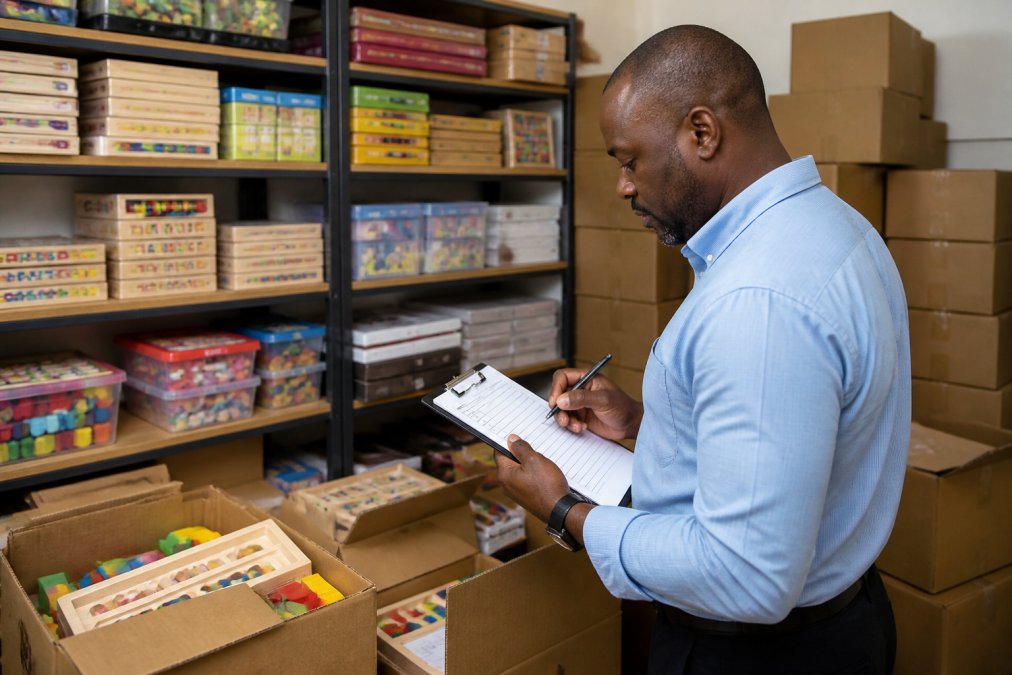
How to Evaluate Suppliers for Durability and Child Safety Standards
A credible supplier should provide material safety documentation confirming non-toxic construction and compliance with applicable standards, durability specifications for high-traffic classroom use, replacement part availability, and clear returns and replacement terms for defective units. Child safety is governed in Nigeria by the National Agency for Food and Drug Administration and Control guidelines on consumer product safety alongside SON standards. A set of 30 construction kits priced higher per unit but lasting three years costs less than cheaper kits that degrade within one term.
Maintenance, Sanitation, and Classroom Management Tips
Maintenance and sanitation determine whether bulk educational supplies earn their value or drain the budget through constant replacement. Prioritise toys with smooth, non-porous surfaces that can be cleaned with a damp cloth and mild disinfectant. Label and zone storage so children can access and return materials independently. Assign a staff member to check for cracked or broken components weekly. Rotate toys between classrooms to extend lifespan and maintain novelty. Replace consumable materials on a fixed schedule rather than waiting for visible contamination.
Curriculum Alignment and Budget-Friendly DIY Alternatives
Curriculum alignment means selecting educational toys that directly support learning objectives in the Nigerian national curriculum. The Nigerian Educational Research and Development Council specifies foundational skills in literacy, numeracy, science, and social development at each level. Procurement decisions mapped to these objectives are easier to justify and more likely to be used consistently by teachers.
Budget-friendly DIY alternatives include sorting trays made from egg cartons and dried beans, lacing boards cut from cardboard with punched holes, counting manipulatives from bottle caps or seeds, and playdough made from flour, salt, water, and food colouring. The limitation is teacher preparation time; use them selectively for activities where preparation is simple and educational return is high.
How to Choose the Right Affordable Educational Toys for Schools
Choosing the right affordable educational toys comes down to four decisions: age appropriateness, curriculum fit, durability, and unit economics. Start with age appropriateness, toys must match the developmental stage of children who will use them. Confirm curriculum fit using learning objectives. Evaluate durability for classroom conditions where toys are handled by 30 children per day across multiple terms. Finally, calculate unit economics by dividing total cost by expected lifespan in school terms. A more expensive item lasting six terms has a lower per-term cost than a cheaper item lasting two.
Summary: selecting educational toys for schools by priority
| Decision Factor | What to Check | Why It Matters |
|---|---|---|
| Age appropriateness | Developmental stage match | Prevents frustration and boredom |
| Curriculum alignment | Link to NERDC learning objectives | Ensures consistent classroom use |
| Durability | Material quality, surface finish | Reduces replacement costs |
| Child safety | SON/NAFDAC documentation | Protects children, meets legal requirements |
| Unit economics | Cost per school term | Identifies true value, not just sticker price |
| Supplier reliability | Returns policy, parts availability | Protects bulk investment |
School administrators face a genuine tension between tight procurement budgets and the need for classroom resources that last and teach. MasterKids offers a curated range of safe, durable, curriculum-aligned educational toys for schools, sourced to meet child safety standards and priced for bulk purchasing. Browse the MasterKids catalogue to find age-appropriate learning materials for every classroom, and shop with confidence knowing every product has been selected to keep counterfeit and low-quality items out of Nigerian schools.
Frequently Asked Questions
What are the best educational toys for early childhood development?
The strongest picks for early childhood development combine sensory play with hands-on learning. Montessori-inspired materials such as shape sorters, stacking rings, and wooden puzzles build fine motor coordination and spatial awareness. STEM-focused construction sets introduce foundational problem-solving skills. For pre-school classrooms, art and craft supplies that encourage imaginative play also support cognitive development and literacy readiness. Prioritise non-toxic, age-appropriate materials that meet child safety standards recognised by the Standards Organisation of Nigeria (SON).
Where can schools buy bulk educational toys at wholesale prices?
Schools can source wholesale educational toys for schools directly from specialist educational suppliers or curated online platforms like MasterKids, which offer bulk pricing for classroom resources. When purchasing in bulk, request a product catalogue, confirm non-toxic and durable materials, and ask about minimum order quantities. Buying wholesale reduces the per-unit cost significantly and allows school administrators to equip multiple classrooms with consistent, teacher-approved learning materials without exceeding tight procurement budgets.
How do educational toys support the national curriculum?
Well-chosen educational toys for schools reinforce the Nigerian national curriculum by making abstract concepts tangible. STEM learning materials for primary schools, for instance, align with Basic Science and Technology objectives, while literacy and numeracy games support English Language and Mathematics outcomes. Montessori-based tools develop the foundational skills children need before formal instruction begins. When schools select toys with clear pedagogical value and documented learning outcomes, teachers can integrate them into lesson plans rather than treating them as optional extras.
How do I know if educational toys are safe for classroom use?
Check that any educational toy carries certification or approval from the Standards Organisation of Nigeria (SON) or meets equivalent international child safety standards accepted in Nigeria. Look for non-toxic labelling on art and craft supplies, smooth edges on construction sets, and age-appropriate size guidance to prevent choking hazards. Reputable suppliers will provide safety documentation on request. Avoid unbranded or counterfeit toys, which often skip safety testing entirely and pose real risks in classroom environments.
What are budget-friendly alternatives to commercial educational toys for schools?
DIY alternatives can be highly effective when budgets are tight. Teachers can create sorting games from bottle caps, build counting tools from dried beans or seeds, and fashion simple puzzles from cardboard. Recycled materials such as cardboard tubes, fabric scraps, and plastic containers support sensory play and fine motor skill development at minimal cost. These options work best when paired with at least a few durable, purpose-built classroom resources to cover STEM and critical thinking objectives the curriculum requires.
This article was written using GrandRanker