 listicle
Durable Toys for Energetic Toddlers: A 2026 Guide
Table of Contents
- Why Energetic Toddlers Need Durable Toys
- How to Choose Durable Toys That Last
- Toy Safety Standards in Nigeria: What Parents Should Know
- Best Durable Toys for Active Play
- Educational Toys for High Energy Kids
- Maintenance and Storage Tips for Long-Lasting Toys
- Conclusion
- Frequently Asked Questions
Last Updated: September 22, 2026
Why Energetic Toddlers Need Durable Toys
If you have ever watched a two-year-old turn a "gentle" toy into a projectile within ten minutes, you already understand the problem. Durable toys for energetic toddlers are not a luxury; they are the only kind worth buying.
At MasterKids, we hear the same story from parents every week. A toy looks lovely in the photos, arrives, and falls apart before the month ends. The wheels snap. The seams split. The paint peels. Money gone, child bored, and a fresh search begins.
Here is the uncomfortable truth most buying guides avoid: toddler energy is not the enemy. Poor construction is. A child who climbs, throws, rocks, and hoppers across the sitting room is doing exactly what growing bodies are designed to do. Your job is not to calm the child down. It is to hand them something that can keep up.
That single shift in thinking changes how you shop. Instead of asking "is this cute?", you ask "will this survive my child?" Below, we break down how to judge durability properly, what safety markings actually mean, and which types of toys hold up best to daily punishment.
How to Choose Durable Toys That Last
The best way to choose durable toys is to inspect materials, construction, and safety certification before you look at the colour or character printed on the box. A toy that passes those three checks will almost always outlast a cheaper lookalike.
Check the Materials and Construction
Start with what the toy is made of. For energetic toddlers, dense foam, thick-walled plastic, and solid wood outperform thin moulded shells every time.
Run your thumb along the seams. On soft toys, stitching should be tight and doubled at stress points such as handles and straps. On plastic, joints should feel rigid with no flexing when you press them.
- Foam construction: look for high-density foam that springs back rather than denting
- Plastic: thicker walls, rounded edges, no sharp moulding lines
- Wood: smooth sanded surfaces with water-based, non-toxic finishes
- Fabric: reinforced stitching and washable covers
Weight capacity matters too. A balance board or climbing block rated well above your child's weight will feel stable and last through siblings.
Look for Safety Certifications
Safety markings tell you the toy has been tested against recognised standards rather than assembled to a price.
Check the packaging for clear labelling on age suitability, materials, and manufacturer details. A genuine product names the maker and importer.
Toy Safety Standards in Nigeria: What Parents Should Know
Toy safety standards in Nigeria are enforced through the Standards Organisation of Nigeria (SON), which sets and monitors product standards for goods sold in the market, including toys. Parents can check whether a product carries recognised conformity markings before buying.
What SON Actually Does
SON operates a conformity assessment programme for regulated products. For toys, this generally means the product should carry evidence that it has been tested against applicable Nigerian Industrial Standards (NIS) or accepted international equivalents. The marking you are looking for is the SON Conformity Assessment (SONCAP) certificate or the Mandatory Conformity Assessment Programme (MANCAP) mark, depending on whether the toy is imported or locally manufactured.
In practice, a compliant toy will show:
- A manufacturer name and address, not just a brand logo
- An age suitability warning, usually "Not suitable for children under 36 months" where small parts are present
- A material description (for example, "BPA-free polyethylene" or "water-based paint")
- A batch or model number that lets the seller trace the item
How to Verify Before You Buy
Ask the seller for the SONCAP or MANCAP reference. A legitimate importer or manufacturer can produce it. If they cannot, the toy has not been through the conformity process and you have no assurance it was tested for small parts, sharp edges, or toxic finishes.
What This Means for Your Shopping
The practical takeaway is simple: buy from sellers who can show you what they are selling and where it came from. Market stalls and unverified online listings are where counterfeit and low-quality toys circulate most.
Best Durable Toys for Active Play
The most durable toys for active play fall into two groups: indoor builders that develop balance and coordination, and outdoor movers that let a toddler burn energy safely. Both should be matched to your child's current abilities.
Indoor Climbing and Balance Builders
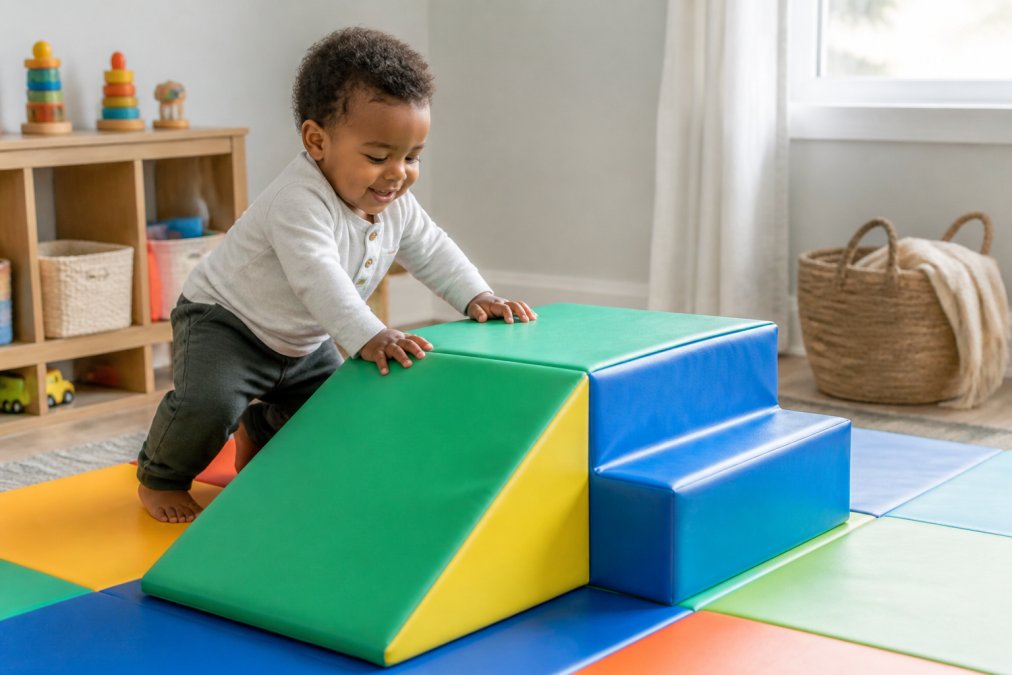
Indoor climbing sets made from dense foam are the standout choice for flats and small playrooms. They develop gross motor skills, spatial awareness, and balance without the risk of a hard fall.
Outdoor Movement Toys for Burn Energy
Outdoor play is where stamina and physical development really take off. Trikes, hoppers, and ride-on rockers give toddlers a way to burn energy that also builds leg strength and motor planning.
| Toy Type | Best For | Key Durability Check |
|---|---|---|
| Foam climbing blocks | Indoor balance and coordination | Dense foam, washable cover |
| Balance boards | Core strength and motor planning | Weight capacity, non-slip base |
| Trikes | Outdoor stamina and leg strength | Wide base, sturdy wheels |
| Hoppers | Burning energy outdoors | Thick rubber, strong handle |
| Rockers | Sensory play and calming motion | Solid frame, smooth edges |
Educational Toys for High Energy Kids
Educational toys for high energy kids work best when they demand movement as well as thought. A child who cannot sit still will engage far more with a toy that lets them build, sort, and move while learning.
Maintenance and Storage Tips for Long-Lasting Toys
Cleaning and storing toys properly can add years to their life, and most parents skip both steps entirely. This is also where the biggest gap in most buying guides sits: nobody tells you what to do with a foam climbing set once it is in your sitting room and your toddler has moved on to the trike.
A Simple Cleaning Routine by Material
Different materials need different care. Using the wrong method can break down foam or strip finishes faster than play ever would.
- High-density foam: Wipe weekly with a damp cloth and mild soap. Do not soak. Foam that stays wet loses its shape and can grow mould inside the cover. Air-dry fully before the child uses it again.
- Thick-walled plastic: Wipe with a mild soap solution and rinse. Avoid abrasive pads, which scratch the surface and create places for grime to settle. A soft brush gets into moulded grooves without damage.
- Solid wood: Dust with a dry cloth and wipe with a barely damp cloth when needed. Do not use harsh chemicals, which strip water-based finishes. Re-oil untreated wood occasionally with a child-safe oil.
- Fabric covers: Wash according to the label, usually on a gentle cycle. Zip covers closed before washing to protect the zip. Air-dry rather than tumble-dry where possible, as heat can shrink covers and make them hard to refit.
Storage Solutions for Bulky Active Toys
This is the part most guides ignore. A foam climbing block, a balance board, and a trike can take over a small flat within a week. Here is how to keep them manageable.
A Monthly Maintenance Check
- Tighten any screws, bolts, or joints on trikes, rockers, and climbing frames
- Check seams and stitching on fabric covers and soft toys, especially at handles and straps
- Look for cracks, dents, or flexing in plastic parts
- Test that non-slip bases still grip
- Replace any part that has become loose or sharp rather than trying to repair it with tape
When you are choosing your next durable toy from MasterKids, think about where it will live when it is not being played with. A toy that fits your storage is a toy that stays in rotation.
Conclusion
The real challenge is not finding toys your toddler will love for a week. It is finding toys that survive the second week, the second month, and the second child.
Frequently Asked Questions
What features make a toy durable for active toddlers?
Look for toys made from thick, non-toxic plastic, solid wood, or high-density foam. Check for reinforced joints, rounded edges, and a weight capacity that matches your child. Bungee cords on rockers and hoppers should be securely attached. Durable toys for energetic toddlers often carry safety certifications and use impact-resistant materials that handle rough play without cracking or splintering.
How can I identify safe and authentic toys for my child?
Buy from trusted retailers like MasterKids that source products meeting toy safety standards in Nigeria. Check for the SON certification mark and clear labelling with age recommendations. Avoid counterfeit toys sold at unusually low prices. Authentic toys list manufacturer details, materials, and warnings. If a toy has a strong chemical smell or loose parts, return it immediately. Supervised play is still important for toddlers under three.
Are wooden toys better than plastic for energetic play?
Both can be durable if well-made. Wooden toys resist impact and offer a classic feel, but cheap wood can splinter. High-quality plastic toys are lightweight, easy to clean, and often more affordable. For energetic toddlers, choose solid wood with non-toxic finishes or thick, BPA-free plastic. The key is construction quality, not just material. MasterKids stocks options in both categories that meet safety standards.
How do I maintain toys to ensure they last longer?
Wipe plastic and wooden toys with a damp cloth and mild soap weekly. Avoid soaking wooden toys. Check for loose screws, cracked parts, or frayed bungee cords monthly and tighten or repair as needed. Store bulky active toys in a designated bin or corner to prevent damage. For foam construction, keep away from direct sunlight. Proper maintenance extends the life of durable toys for energetic toddlers and keeps play safe.