 listicle
Best Educational Toys for Multiple Age Groups
Table of Contents
- Educational Toys That Grow With Your Child
- Best Problem-Solving Toys for Preschoolers
- STEM Kits for Primary School Children
- Multi-Age Play and Inclusive Learning
Last Updated: August 24, 2026
Educational Toys That Grow With Your Child
Finding toys that work across multiple ages is challenging, what delights a toddler becomes boring within a year. The best educational toys solve this by offering layers of complexity that grow with your child's abilities.
At MasterKids, we've curated toys and STEM kits designed to evolve alongside your child's developmental milestones. These aren't one-trick toys. They're tools for learning that adapt as cognitive development advances, fine motor skills improve, and problem-solving abilities deepen.
This guide covers the best educational toys across four key categories: toys that grow with your child, problem-solving toys for preschoolers, STEM kits for primary school children, and multi-age play options that keep siblings engaged together.
Best Problem-Solving Toys for Preschoolers
Problem-solving toys for preschoolers develop critical thinking in children aged 2-5 by combining hands-on engagement with age-appropriate challenges (peer-reviewed research). These toys build fine motor skills, hand-eye coordination, and logical reasoning through tactile learning and trial-and-error discovery.
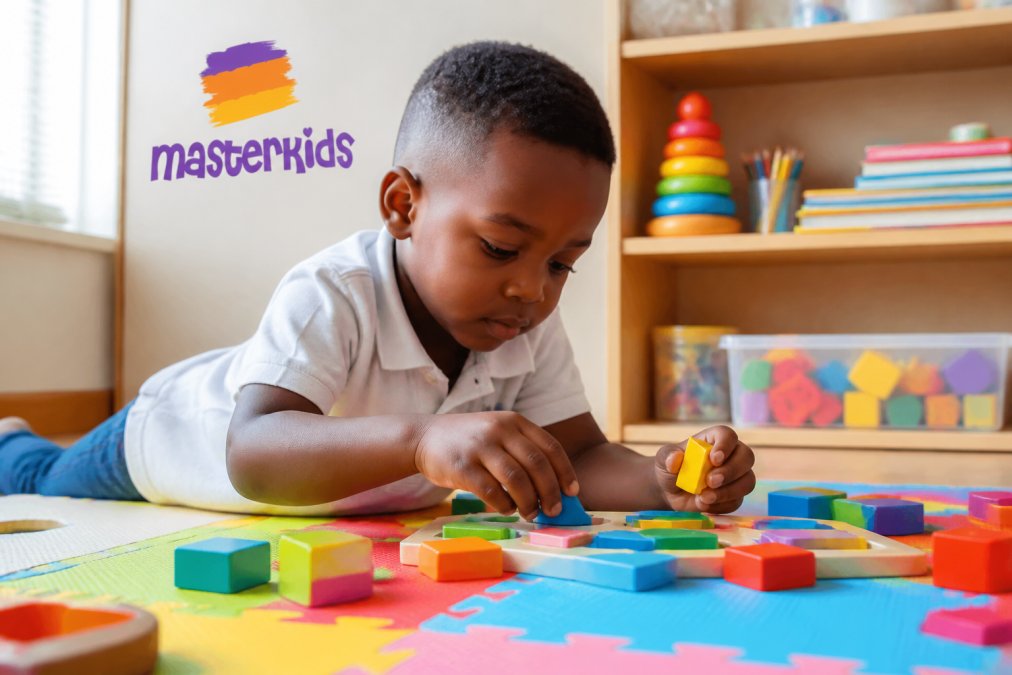
Quality building blocks remain the foundation of early childhood education. Unlike simple stacking toys, interlocking blocks teach spatial reasoning and encourage imaginative play. A three-year-old learns basic stacking; a five-year-old builds symmetrical structures and follows simple instructions (the NIH). Magnetic tiles bridge the gap between 2D and 3D thinking, with younger preschoolers enjoying the sensory satisfaction of magnetic connection whilst older preschoolers plan structures and understand how shapes combine to form larger forms. Shape-sorting toys address multiple developmental needs simultaneously, a two-year-old practises hand-eye coordination whilst a four-year-old solves spatial puzzles and learns shape recognition.
STEM Kits for Primary School Children
STEM kits for primary school children introduce structured learning through hands-on engineering, coding, and scientific discovery (peer-reviewed research). These kits develop critical thinking, logical reasoning, and foundational technical skills for children aged 5-11.
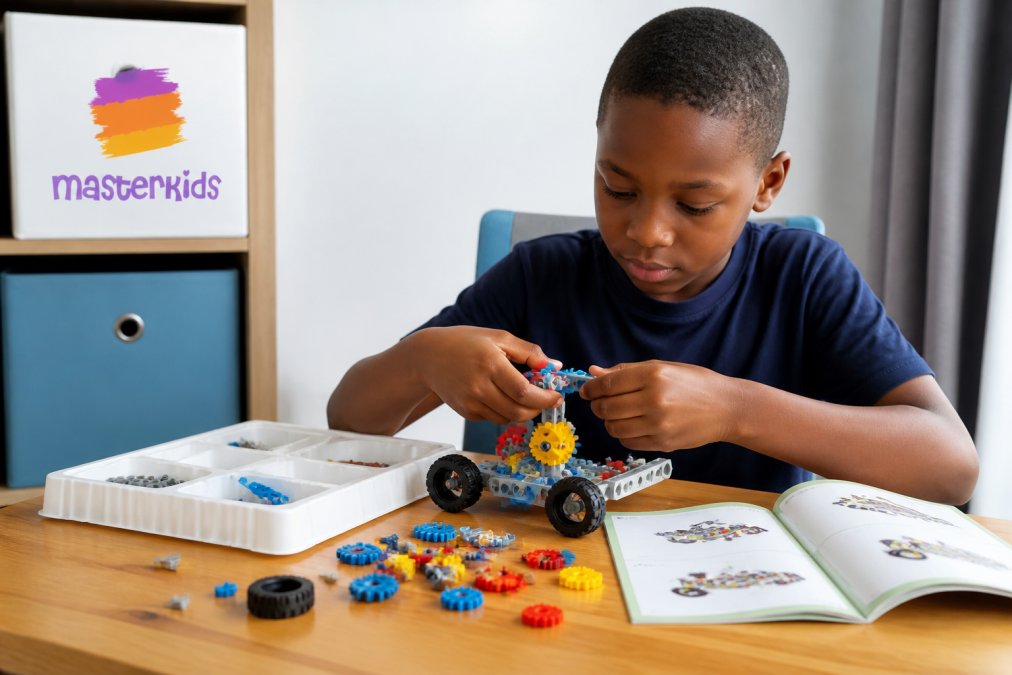
Building and construction kits teach spatial reasoning and problem-solving through tangible challenges. A younger primary student follows step-by-step instructions to build a simple machine. An older student modifies designs to solve specific challenges. Coding and logic kits introduce computational thinking without screens, using physical tokens or mechanical pieces to teach sequencing and conditional logic. Science experiment kits combine tactile learning with observable results, teaching the scientific method through discovery.
Multi-Age Play and Inclusive Learning
The best educational toys for multiple age groups incorporate multi-age play compatibility, allowing younger and older children to engage simultaneously without frustration. Open-ended building systems scale naturally across ages. A three-year-old stacks pieces; a seven-year-old builds to specification; a twelve-year-old designs structures and teaches younger siblings.
Inclusive design matters. Toys that support varied sensory inputs and multiple interaction methods keep more children engaged longer. Durability and eco-friendly materials ensure toys survive multiple children and years of play.
Finding the right educational toys for multiple age groups means choosing toys that evolve with your child's abilities rather than becoming obsolete within months. MasterKids offers a carefully selected range of problem-solving toys, STEM kits, and multi-age play options designed to support developmental milestones from infancy through the teenage years. Every product meets rigorous safety standards and durability requirements. With nationwide delivery available, you can browse our collection from home and find toys that grow with your family, shopping with confidence knowing you're choosing from curated, high-quality options built for real childhood development. Explore MasterKids today and discover toys that make learning through play a reality for every child in your home.
| Toy Type | Age Range | Key Benefit | Best For |
|---|---|---|---|
| Building blocks | 2-8 years | Spatial reasoning, fine motor skills | Early childhood through primary school |
| Magnetic tiles | 3-10 years | 3D thinking, geometric concepts | Multi-age sibling play |
| STEM kits | 5-12 years | Problem-solving, critical thinking | Structured learning with scalable challenges |
| Coding toys | 6-11 years | Logical reasoning, sequencing | Progressive skill development |
| Science kits | 6-12 years | Scientific method, observation | Hands-on discovery learning |
Frequently Asked Questions
How do I choose educational toys that suit children of different ages?
Look for toys that offer multiple levels of play and learning. Open-ended toys like building blocks, construction sets, and problem-solving games work across age ranges because each child engages at their own developmental level. Check the manufacturer's age guidance, but focus on toys that encourage imaginative play, critical thinking, and skill-building rather than single-use items. Educational toys from MasterKids are selected to support developmental milestones across various stages, so you can find options suitable for siblings of different ages.
Are STEM kits suitable for mixed-age play?
Many STEM kits are designed with flexible difficulty levels, making them suitable for mixed-age groups. Younger children can explore basic concepts like sorting and pattern recognition, whilst older siblings tackle more complex problem-solving and logical reasoning tasks using the same materials. Look for kits that encourage collaborative play and allow each child to work at their own pace. This approach supports both fine motor skills development in younger children and advanced cognitive development in older learners, making STEM kits an excellent investment for families with children across multiple age groups.
What are the benefits of open-ended toys for child development?
Open-ended toys foster imaginative play, creative expression, and child-led discovery without prescribed outcomes. They develop critical thinking, spatial reasoning, and problem-solving abilities across all ages. Unlike toys with single functions, open-ended options like building materials, art supplies, and construction sets grow with your child, supporting developmental milestones from infancy through the teenage years. They encourage sensory play in younger children and instructional design thinking in older learners, making them cost-effective long-term investments in foundational skills and preschool readiness.
This article was written using GrandRanker