 how-to
How to Encourage Creative Play at Home for Toddlers
Table of Contents
- Play Based Learning Activities That Spark Creative Play for Toddlers
- Best Educational Toys for Creative Play to Encourage Imagination
- How to Set Up a Play Corner at Home for Independent Play
- Frequently Asked Questions
Last Updated: September 14, 2026
Play Based Learning Activities That Spark Creative Play for Toddlers
Learning how to encourage creative play at home for toddlers starts with one shift: stop directing and start providing. At MasterKids, the best sessions happen when a child leads and an adult sets the stage.
These activities work because they are open-ended. A toy with one button does one thing; a cardboard box can become a car, a cave, or a drum.
Play based learning activities that spark imagination fall into a few groups:
- Role-playing: old hats, scarves, and safe kitchen items turn a corner into a shop
- Art and sensory play: chunky crayons, washable paint, and a tray of pasta for scooping
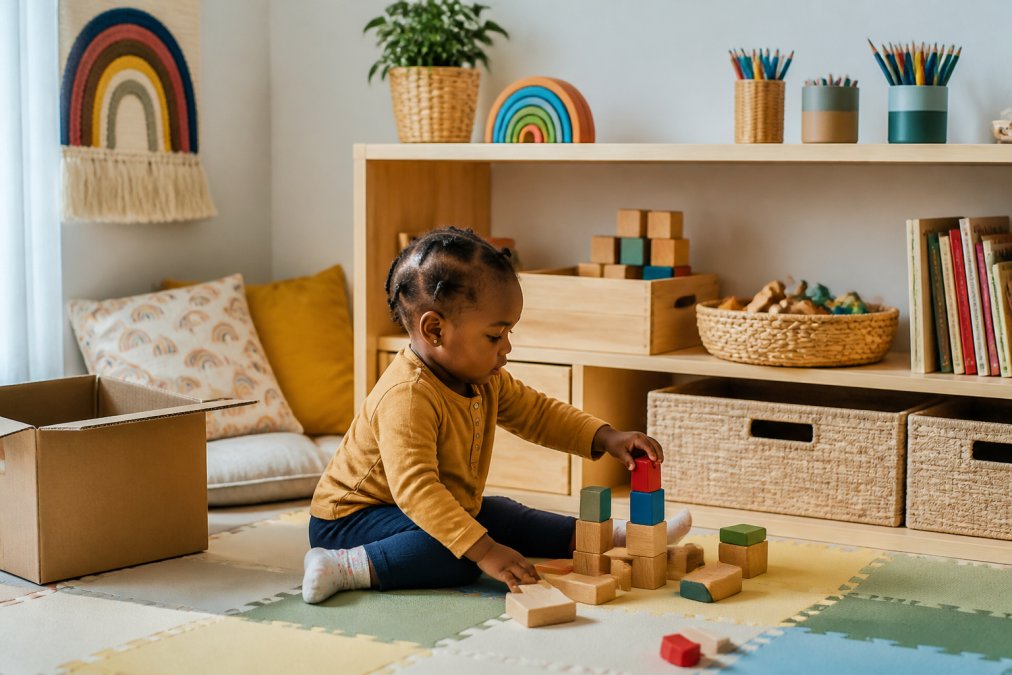
- Building: wooden blocks, stacking cups, and empty boxes for towers that fall and get rebuilt
- Music and movement: shakers made from sealed bottles of rice, plus dancing
- Nature exploration: leaves, stones, and shells collected on a walk and sorted into bowls
Rotate these every week or two rather than putting everything out at once, so a "new" box of blocks feels like a gift.
Best Educational Toys for Creative Play to Encourage Imagination
The best educational toys for creative play are open-ended ones, usable in many ways rather than one. A shape-sorter teaches one skill; plain wooden blocks teach a hundred, because the child decides what each block becomes.
When choosing, look for:
- No single correct answer. If there is only one way to play, it is not a creative toy.
- Durable and safe. Smooth edges, non-toxic finishes, and parts too large to swallow.
- Simple over flashy. A toy that beeps and lights up does the imagining for the child.
For parents worried about counterfeit items, buy from a trusted retailer that checks its stock. MasterKids offers a curated selection of safe, high-quality toys, STEM kits, and educational resources designed to prepare young minds for the future, with nationwide delivery.
| Toy type | Best for | Why it works |
|---|---|---|
| Wooden blocks | Building and stacking | Endless structures, no fixed outcome |
| Dress-up basket | Role-playing | Sparks stories and language |
| Sensory bin | Messy play | Builds fine motor skills and focus |
How to Set Up a Play Corner at Home for Independent Play
Learning how to set up a play corner at home comes down to three things: a low shelf, a soft mat, and a small number of toys in reach, so your toddler can start playing without asking you for anything.
Follow these steps:
- Pick a corner away from walkways and screens.
- Place a low, stable shelf so toys are visible and reachable.
- Add a soft mat or rug for floor play.
- Put out only a few toys at a time, and rotate them weekly.
- Keep a basket for art supplies and a box for dress-up items.
- Sit nearby at first, then gradually step back as your child settles.
Independent play grows with practice. Start with a few minutes and let it stretch naturally; if your child looks up, smile and stay quiet rather than directing.
Frequently Asked Questions
How can I encourage imaginative play in my toddler?
Provide open-ended toys like blocks, cardboard boxes, and dress-up items that let your toddler decide how to use them. Join in briefly, then step back. Create a simple play corner with a few rotated toys. Avoid directing the play; instead, ask open questions like 'What happens next?' This builds creative confidence and independent play skills.
How do I encourage my toddler to play on their own?
Start with short periods of independent play, gradually increasing time. Set up a safe play corner with a few engaging toys and rotate them weekly. Stay nearby but busy, so your toddler feels secure. Praise their focus. Over time, they will play alone for longer stretches, building problem-solving and cognitive growth.
What are some creative activities I can do with my kids at home?
Try art and sensory activities like drawing with crayons, playing with homemade playdough, or making a sensory bin with rice and scoops. Build forts from cardboard boxes, have a dress-up parade, or go on a nature exploration walk to collect leaves. These play based learning activities boost fine motor skills and creative expression without expensive supplies.
Building a creative routine takes patience, and the right toys make it far easier. MasterKids helps by offering a curated selection of safe, high-quality toys, STEM kits, and educational resources for every stage, all with nationwide delivery. Our focus on safe, developmental products means you can set up a play corner with confidence. Get started with MasterKids and give your toddler room to imagine, build, and explore.