
 listicle
Best STEM Kits for Older Children: A 2026 Guide
Table of Contents
- Best STEM Kits for Older Children
- Affordable STEM Kits for Primary Students
- How to Choose the Right STEM Kit for Your Child
- Benefits of STEM Learning for Children's Development
- Frequently Asked Questions
Last Updated: September 2, 2026
Best STEM Kits for Older Children
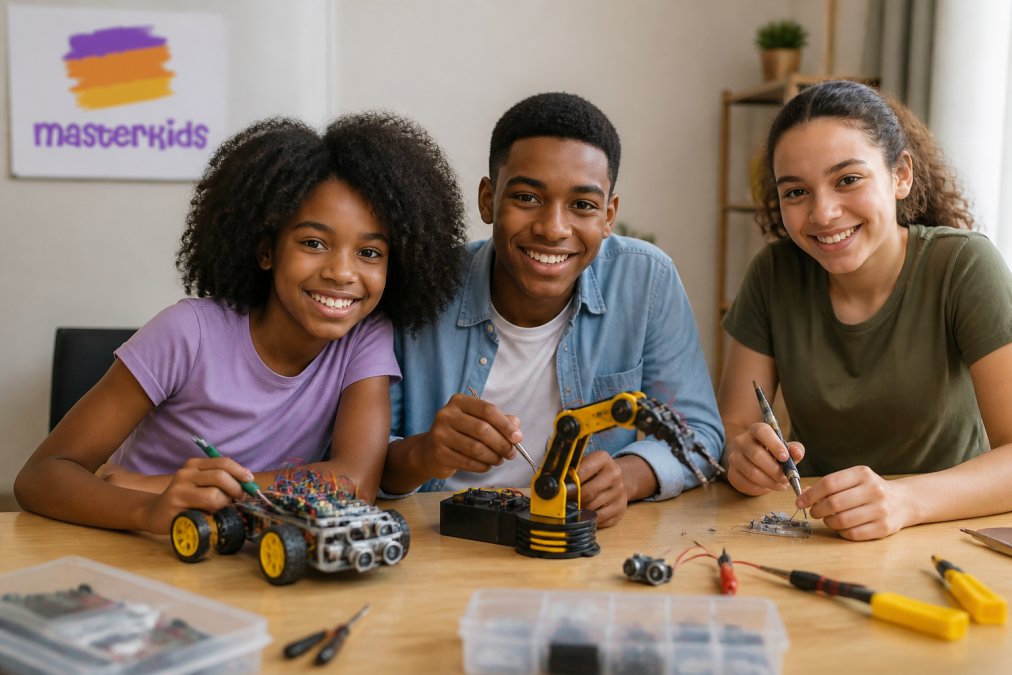
Older children need STEM kits that challenge their thinking and build real problem-solving skills. The best STEM kits for older children balance hands-on experimentation with genuine learning outcomes, moving beyond simple assembly into engineering principles, coding logic, and scientific method. 🧪
At MasterKids, we understand that what works for a ten-year-old falls flat for a teenager. We've curated a selection of STEM kits designed specifically for older learners ready for complexity. These kits demand critical thinking, encourage trial and error, and produce tangible results that keep children engaged long after the first build.
The kits we offer share three qualities: they teach transferable skills, they resist becoming shelf clutter, and they genuinely hold a child's attention through completion. Below, we offer guidance on which kit matches your child's interests and your family's needs.
Affordable STEM Kits for Primary Students
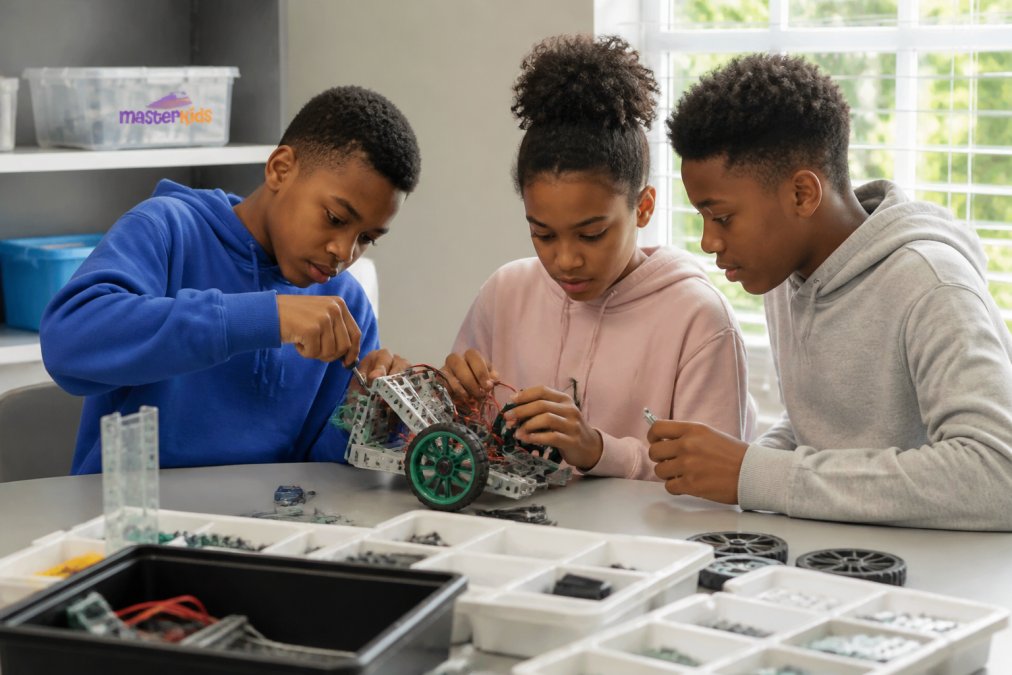
Affordable STEM kits for primary students can deliver genuine educational value without requiring large investment. The key is choosing kits that teach real concepts rather than simply assembling pre-designed components. 💡
Look for kits that emphasise hands-on learning and discovery over passive instruction. Budget-friendly options work best when they focus on a single discipline, robotics, circuitry, or engineering, rather than attempting to cover everything at once. A focused kit encourages deeper exploration and builds confidence through mastery.
The most effective affordable STEM kits include clear instructions, durable components, and room for independent exploration. They should allow your child to modify designs, test hypotheses, and learn from mistakes without requiring constant adult supervision.
How to Choose the Right STEM Kit for Your Child
Selecting the right STEM kit depends on understanding your child's current abilities, interests, and learning style. A kit that's too advanced creates frustration; one that's too simple breeds boredom. The best choice aligns with where your child is now and where they're ready to grow. 🎯

Start by considering your child's natural interests. Does she gravitate towards building and construction? Look for engineering or robotics kits. Is he fascinated by how things work? Circuitry and physics kits offer hands-on discovery. Does your child enjoy problem-solving challenges? Coding-based kits develop logical reasoning and algorithmic thinking.
Next, assess the parental involvement required. Some kits demand constant guidance; others encourage independent exploration. Your comfort level with the subject matter matters too, you don't need to be an engineer, but you should feel confident supporting your child through the learning process.
Finally, consider durability and long-term value. Will the kit hold up to repeated use? Can your child revisit it months later and still find new challenges? The best STEM kits for older children reward repeated engagement and support skill progression over time.
Benefits of STEM Learning for Children's Development
STEM learning builds capabilities that matter far beyond the classroom. When children engage with hands-on STEM activities, they develop critical thinking, resilience, and confidence in their ability to solve problems. 🧠
Experimentation teaches the scientific method naturally. Your child forms hypotheses, tests them, observes results, and adjusts their approach. This cycle of trial and error builds analytical skills and teaches that failure is part of discovery, not a reason to quit.
Robotics and coding kits develop logical reasoning and spatial awareness. Children learn to break complex problems into smaller steps, a skill that transfers to maths, writing, and everyday decision-making. Engineering kits teach how materials behave under stress, how systems interact, and how small design changes produce measurable results.
Beyond academics, STEM kits build perseverance. A child who completes a challenging build develops genuine confidence and learns that effort produces results, that mistakes contain valuable information, and that complex problems yield to patient thinking.
Choosing the right STEM kit doesn't have to be overwhelming. Start with your child's interests, match the complexity to their current abilities, and prioritise kits that encourage independent exploration and repeated engagement. MasterKids offers a carefully selected range of STEM kits designed for older children, with products chosen for durability, genuine learning value, and the ability to hold a young person's attention through meaningful challenges. We provide nationwide delivery, so you can explore our full range of options and have your chosen kit delivered directly to your home. Visit our website to discover products that fit your child's interests and your family's needs. 🚀
Frequently Asked Questions
What should I look for when choosing a STEM kit for an older child?
Look for kits that match your child's age and interests. Check whether the kit encourages hands-on learning, critical thinking, and problem-solving skills. Ensure instructions are clear and age-appropriate. Consider kits that align with topics your child enjoys, robotics, engineering, coding, or physics. Verify that components are durable and meet safety standards. MasterKids offers curated selections designed to challenge older children while keeping them engaged.
Are STEM kits suitable for teenagers?
Yes, STEM kits are excellent for teenagers. Advanced robotics, coding, and engineering kits help develop technical literacy and analytical skills needed for future careers. These kits support independent exploration and allow teenagers to work on complex projects that build confidence. Many kits encourage collaborative play and innovation, making them ideal for this age group's developmental stage.
How do STEM kits support the development of problem-solving skills?
STEM kits teach children to approach challenges using the scientific method, observation, experimentation, and trial and error. Through assembly, prototyping, and hands-on projects, children learn logical reasoning and spatial awareness. They discover how to break complex problems into smaller steps and test solutions. This project-based learning builds resilience and encourages creative design thinking, skills that benefit academic performance and future careers.
This article was written using GrandRanker