 how-to
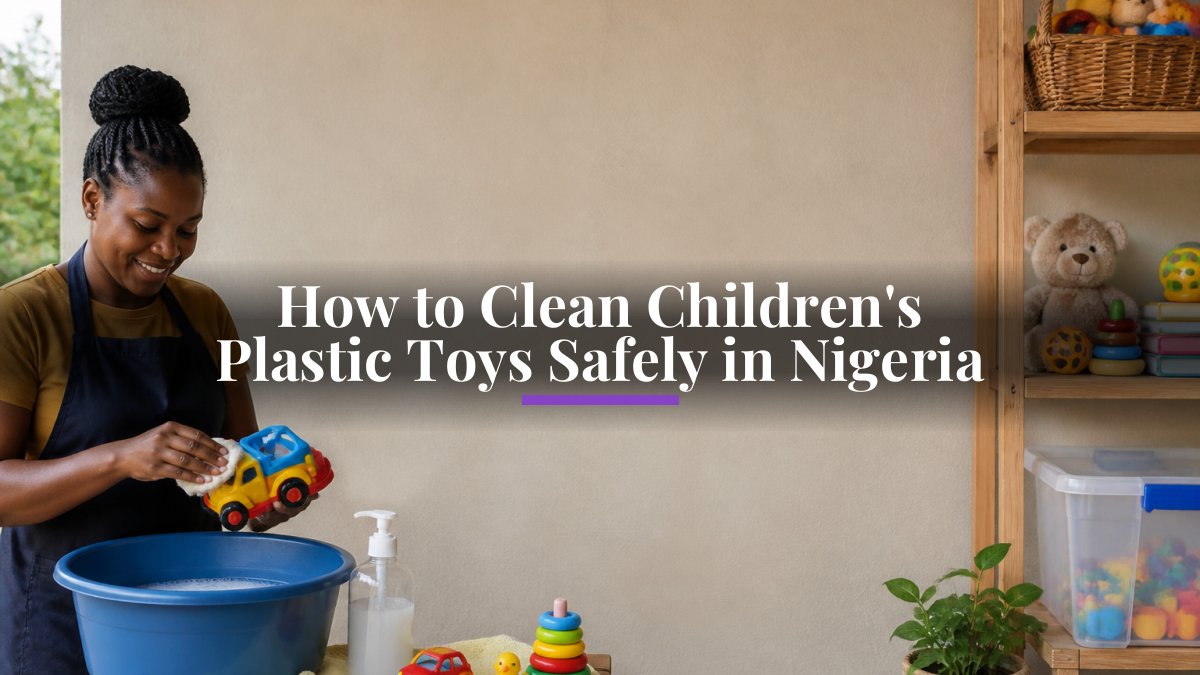
How to Clean Children's Plastic Toys Safely in Nigeria
Last Updated: October 22, 2026
Quick Summary
To learn how to clean children's plastic toys safely in Nigeria, clean first with warm soapy water and a soft brush, rinse thoroughly, then air dry completely. Disinfect with diluted vinegar or diluted bleach mixed exactly as the label states, then rinse and air dry before the toy goes back in the play box.
- Check the label for the material code and washing instructions before you start.
- Wash plastic toys in warm soapy water with a little dishwashing liquid, then rinse and air dry.
- Squeeze bath toys with holes dry after every wash and store them where air can reach them.
- Wash daily-use toys weekly, wipe shared toys after each session, and clean baby toys every few days.
- Wipe electronic and battery-operated toys with a damp cloth, never soak them, and keep the battery compartment dry.
Table of Contents
- Step-by-Step Guide to Cleaning Plastic Toys
- How to Disinfect Plastic Toys Safely
- How Often to Clean Children's Toys
- Frequently Asked Questions
Step-by-Step Guide to Cleaning Plastic Toys
Learning how to clean children's plastic toys safely in Nigeria starts with one rule: clean first, then disinfect. At MasterKids, plastic toys collect dust, food stains and germs fast.
- Check the label for the material code and washing instructions.
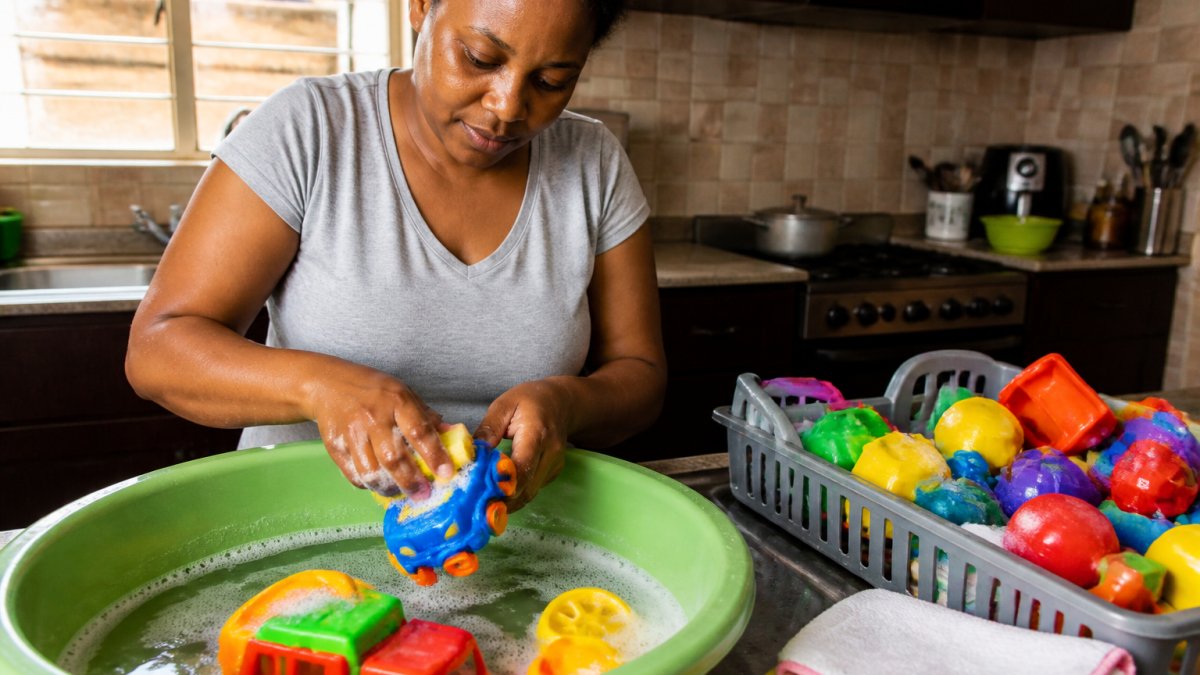
- Brush off loose dirt, then wash in warm soapy water with a little dishwashing liquid.
- Scrub every groove with a soft cloth or toothbrush, rinse thoroughly, and air dry completely on a dish rack.
How to Disinfect Plastic Toys Safely
Cleaning removes visible dirt; disinfecting kills germs. Use diluted vinegar for mild jobs, or diluted bleach mixed exactly as the label states, never guess the ratio. Follow the contact time, then rinse and air dry.
- Keep chemicals away from children
- Wear gloves if your skin is sensitive
- Never mix bleach with other cleaners
- Rinse mouthable toys twice
How Often to Clean Children's Toys
How often to clean children's toys depends on use. A good routine keeps germs and cross-contamination under control.
| Situation | How Often | What to Do |
|---|---|---|
| Daily use at home | Weekly | Warm soapy water wash and air dry |
| Shared toys or playgroups | After each session | Wipe down and disinfect |
| Baby toys and mouthable toys | Every few days | Wash, rinse twice, dry fully |
Inspect bath toys weekly for mould and replace any with dark spots inside. Wipe electronic and battery-operated toys with a damp cloth, never soak them, and keep the battery compartment dry.
For safe, high-quality plastic toys that hold up to regular cleaning, shop our range at MasterKids. We deliver nationwide.
Frequently Asked Questions
How do you clean a plastic toy safely?
Wash plastic toys with warm water and a little dishwashing liquid, use a soft cloth or brush to remove visible dirt, then rinse thoroughly to remove soap residue. For disinfection, soak in a diluted vinegar solution or a bleach solution made according to the product label, then rinse again. Always air dry completely before your child plays with them. Check the toy's material and any manufacturer instructions first, and keep cleaning products out of children's reach.
How often should children's plastic toys be cleaned?
Clean plastic toys at least once a week, and more often if your child is ill, has shared toys with others, or the toys are used outdoors. Bath toys should be cleaned and dried after every use to prevent mould. Toys that go into a child's mouth need more frequent washing. A quick wipe-down with soapy water daily helps, with a deeper clean weekly.
Can plastic toys go in the dishwasher?
Only if the toy is labelled dishwasher-safe by the manufacturer. Most plastic toys, especially those with batteries, stickers, or small parts, should be washed by hand. Dishwasher heat can warp plastic or damage electronic components. When in doubt, hand wash with warm soapy water and rinse well. Always check the toy's instructions or packaging before using a dishwasher.
Cleaning toys well takes a few minutes each week, but the payoff is a safer play space for your child. MasterKids offers curated, high-quality toys and STEM kits for every age, with nationwide delivery and a focus on safe products. Get started with MasterKids and give your child toys you can trust.