
 how-to
Teach Toddlers Shapes and Colours Through Play
Table of Contents
- How to Teach Shapes to Toddlers Through Play
- Colour Sorting Games for Toddlers and Simple Recognition Activities
- Toddler Shape and Colour Activities Using Household Materials
- Frequently Asked Questions
Last Updated: October 13, 2026
How to Teach Shapes to Toddlers Through Play
Teaching toddlers shapes colours and recognising them through play builds early learning skills. 🎨 At MasterKids, we know young children learn best when having fun and exploring with their hands, so they recognise patterns and develop spatial awareness without realising it.
Start with circles and squares, pointing them out in daily life: "Look, your plate is round!" Repeat the same shapes over several weeks so they become familiar.
Hide shapes around the house and ask "Can you find something round?" Toddlers love the hunt.
Colour Sorting Games for Toddlers and Simple Recognition Activities
Colour sorting games are brilliant for helping you teach toddlers shapes colours and recognition through play. 🌈 Start with two or three colours, such as red, yellow and blue, as too many at once can overwhelm young learners.
Gather household items in different colours, such as red blocks, yellow cups and blue fabric scraps, then sort them into piles together, saying the colour name each time. Keep sessions to five or ten minutes.
Make it a game with a basket for each colour. Praise effort, not perfection: if a red block lands in the blue pile, say "That's red, let's find the red basket."
Play a matching game: hold up a red toy and ask "Can you find something red?" This teaches colour recognition through discovery.
Toddler Shape and Colour Activities Using Household Materials
The best toddler shape and colour activities use things you already have at home. 🏠 Everyday materials work brilliantly and keep costs down.
Try these simple activities:
- Sorting by colour and shape: Mix plastic containers, wooden spoons, fabric scraps and cardboard tubes, then sort by colour, then shape.
- Drawing and painting: Let your toddler paint or draw circles and squares. Messy is fine, the movement matters more than the result.
- Play dough shapes: Roll play dough into balls (circles), then flatten them into squares, and let your toddler squash, roll and remake them.
- Snack time learning: Use coloured snacks like berries or cereal pieces and ask "Can you eat the red ones first?"
- Shape tracing: Cut simple shapes from cardboard and let your toddler trace around them with a finger or crayon.
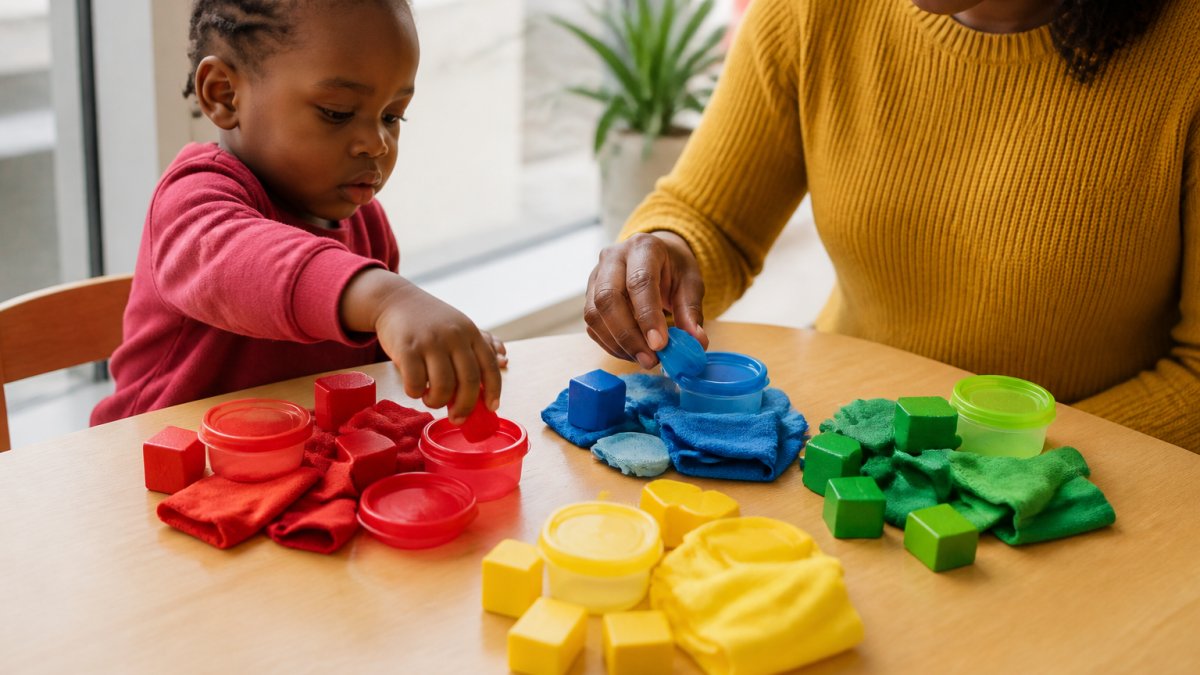
Combine shape and colour practice by asking "Can you find the red circle?" This teaches both concepts without overwhelming your child.
Keep activities short and follow your toddler's lead. If they lose interest, stop and try again later, as learning through play works best when it feels like fun. If you'd like to explore ready-made learning materials to complement your home activities, we offer nationwide delivery so you can access quality educational resources wherever you are.
Frequently Asked Questions
At what age can toddlers start learning shapes and colours?
Most toddlers begin recognising colours around 18 months and shapes by age 2. However, every child develops at their own pace. Start with simple activities like pointing out colours during daily routines. By age 3, many toddlers can name basic colours and identify simple shapes like circles and squares. Play-based learning works best because it keeps activities pressure-free and enjoyable.
What everyday objects can toddlers use to learn shapes and colours?
Household items are excellent teaching tools. Use coloured plastic containers, fabric scraps, wooden spoons, and plastic bottles for sorting activities. Food items like coloured pasta, dried beans, and fruit work well for matching games. Building blocks, socks, and cushions teach shape recognition through play. These materials are safe, accessible, and free or low-cost, making them ideal for hands-on learning at home.
How can I teach my toddler to recognise shapes without overwhelming them?
Focus on one shape at a time over several days. Start with circles, then move to squares and triangles. Use real-world examples: point out round plates, square cushions, and triangular sandwiches during daily routines. Combine shapes with colours gradually, teach colours first, then introduce shapes. Keep activities short (5-10 minutes) and follow your child's interest. Praise effort and exploration rather than perfect answers to build confidence in learning.
Learning shapes and colours takes time and repetition. The key is making it playful and pressure-free. At MasterKids, we stock a range of safe, high-quality toys and learning resources designed to support your child's development through play. Our curated selection helps you create engaging learning moments at home, so your toddler can explore, discover, and grow at their own pace. Visit our website to find the perfect tools for your child's next learning adventure. 🎯