 listicle
Imaginative Play for Social Skills: A Parent's Guide
Table of Contents
- How Imaginative Play Develops Social Skills
- Pretend Play Examples That Teach Real Skills 🎪
- Social Skills Activities for Children Through Play 👥
- Frequently Asked Questions
Last Updated: October 14, 2026
How Imaginative Play Develops Social Skills
Imaginative play is when children create their own worlds, characters, and stories through make-believe activities. 🎭 Through this pretend play, children naturally practise the social skills they'll need throughout life.
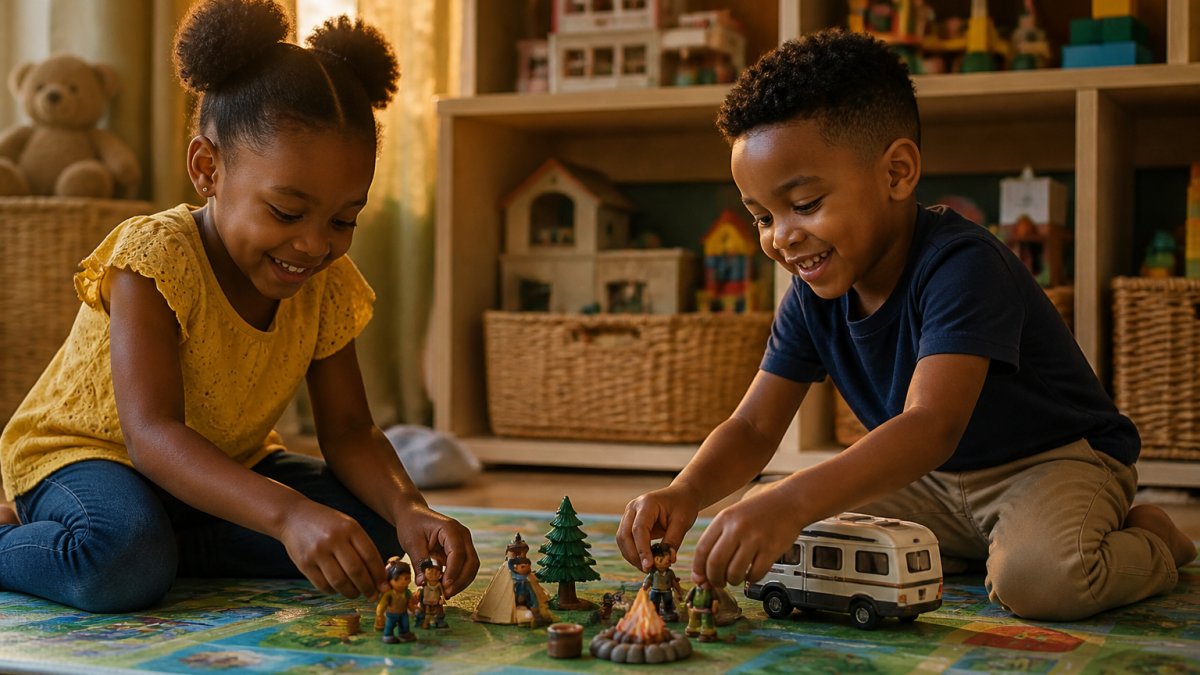
Through imaginative play social skills like communication, cooperation, and perspective-taking develop naturally. They negotiate roles, solve problems together, and manage emotions when things don't go as planned, social development happens through play, not instruction.
At MasterKids, we offer a curated selection of safe, high-quality toys, STEM kits, and educational resources designed to prepare young minds for the future. Children need open-ended toys that let their imagination lead.
Pretend Play Examples That Teach Real Skills 🎪
Pretend play examples show how different scenarios build different abilities. Playing house practises communication and emotional understanding, teaching turn-taking and negotiation naturally.
Doctor and patient role-play builds empathy and perspective-taking, while restaurant play teaches cooperation and sharing, with each role requiring attention to what others need.
Shop scenarios develop language skills and social interaction, as children buy, sell, and explain. These aren't lessons, they're games where social skills emerge organically.
Building and construction play encourages collaborative problem-solving. When two children build a castle together, they must agree on the plan, share materials, and work through disagreements, teaching flexibility and group cooperation.
Social Skills Activities for Children Through Play 👥
Social skills activities for children work best when they feel like play, not practice.
Set up scenarios that require cooperation, such as a treasure hunt where children solve clues together, or a pretend picnic where everyone brings something. These activities don't feel like lessons, they're just fun.
Encourage storytelling and role-play with varied characters. Playing a grumpy character teaches how emotions affect others, while a helpful character reinforces kindness, building emotional intelligence through experience.
Use open-ended materials, such as blocks, fabric, and loose parts, that let children decide what to build and how to work together. With no single "right" way to use them, children must talk, agree, and adjust their plans.
Create spaces where children feel safe to play. When they know they won't be interrupted or criticised, they relax into deeper, more collaborative play and take social risks.
Include children of different ages when possible. Younger children learn by watching older ones, while older children develop patience and teaching skills.
Sometimes the best thing adults can do is step back and observe. Your role is to provide good materials, create a safe space, and let their imagination do the work. 🌟
Helping children develop strong social skills is one of the best investments you can make in their future. Imaginative play social skills give them a natural, joyful way to practise cooperation, communication, and empathy. At MasterKids, we stock toys and resources designed to spark this kind of open-ended, collaborative play, from role-play sets to building materials to storytelling props. With nationwide delivery, you can access our selection of developmental toys wherever you are. SHOP our selection of developmental toys today.
Frequently Asked Questions
How does imaginative play help children develop social skills?
Imaginative play creates safe spaces where children practise real-world interactions without pressure. Through role-play, children learn to take turns, listen to others, negotiate ideas, and understand different perspectives. They experiment with communication, solve problems together, and build confidence in social situations. Make-believe scenarios let them rehearse cooperation, sharing, and emotional expression in a playful, low-stakes environment that strengthens peer relationships.
What are some good pretend play examples for developing cooperation?
Doctor and patient games teach listening and empathy. Running a pretend shop develops negotiation and turn-taking. Playing house or family scenarios builds understanding of roles and cooperation. Restaurant or café role-play practises communication and teamwork. Camping or adventure games require planning together and problem-solving as a group. These activities naturally encourage children to listen, share ideas, take turns, and work toward common goals.
How can I encourage imaginative play if my child seems reluctant?
Start with props and open-ended toys from MasterKids that spark creativity, such as dress-up costumes, building blocks, or play figures. Play alongside your child without directing the narrative. Ask open questions like 'What happens next?' rather than telling them what to do. Join their play when invited, follow their lead, and let them make decisions. Provide unstructured time and space without pressure. Some children warm up slowly; consistency and patience matter more than forcing engagement.