 ultimate-guide
How to Choose Toys for Development: A 2026 Guide
Table of Contents
- Match Toys to Developmental Milestones
- Safety Standards for Children's Toys: What to Check
- The Benefits of STEM Toys for Toddlers
- Best Problem Solving Toys for Preschoolers
- Digital vs. Analog Toys: Finding the Right Balance
- Toy Rotation Strategies for Ongoing Engagement
- Conclusion: Choosing Toys That Inspire Big Dreams
- Frequently Asked Questions
Last Updated: September 23, 2026
Match Toys to Developmental Milestones
Learning how to choose toys for development starts with one truth: the right toy matches where your child is right now. A toy that stretches a skill just beyond what your child can do keeps them curious; one that is too easy is abandoned within a week. A toy that stretches a skill just beyond what your child can do keeps them curious; one that is too easy is abandoned within a week.
Newborns to 12 Months: Sensory Exploration
For babies under one, development runs through the senses. High-contrast patterns support visual tracking, soft rattles build auditory feedback, and textured teethers encourage tactile stimulation. Look for lightweight toys a baby can grasp and bring to the mouth, because mouthing is how infants explore.
Toddlers (1-3 Years): Movement and Problem-Solving
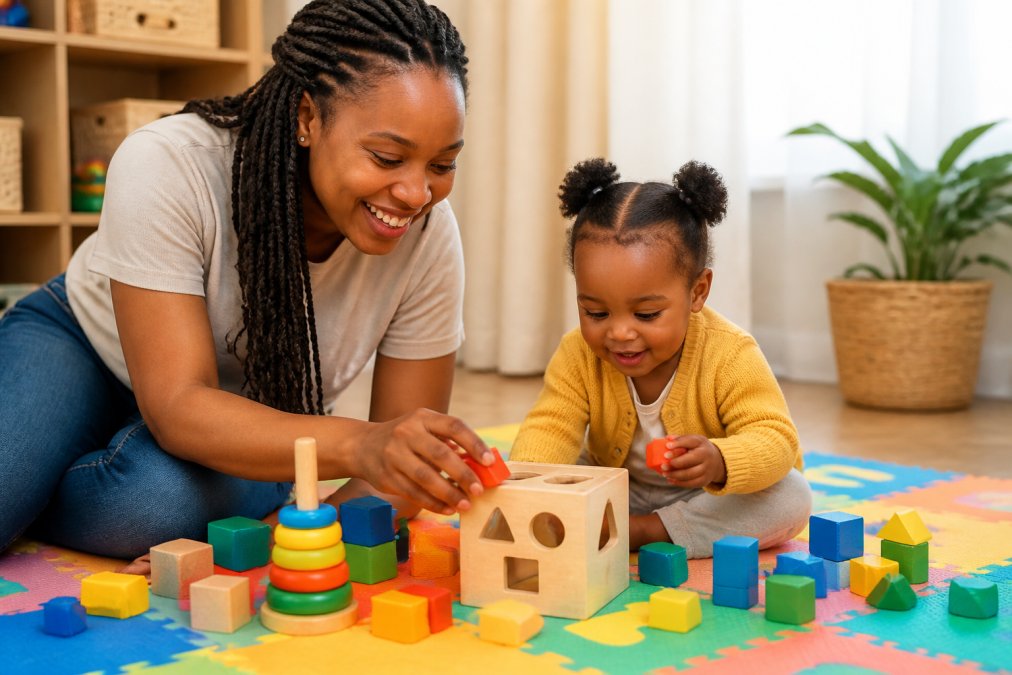
Toddlers are walkers, climbers and stackers. Push-and-pull toys build gross motor skills, while shape sorters and simple puzzles develop fine motor skills and early problem-solving. Choose chunky pieces that are easy for small hands to grip.
Preschoolers (3-5 Years): Imagination and Social Play
Between three and five, play becomes a rehearsal for life. Role-play sets, dress-up and building blocks drive imaginative play, while board games introduce turn-taking and social-emotional learning. Open-ended play matters most: a plain set of blocks outlasts a single-purpose toy because the child decides what it becomes.
Safety Standards for Children's Toys: What to Check
Safety standards for children's toys are the non-negotiable part of every purchase, and they matter even more when counterfeit goods circulate in the market. A toy that fails basic checks is not a bargain at any price. Before you buy, inspect the physical build, then look at what the toy is made from.
The Regulatory Picture You Should Know
In practice, a toy sold through a reputable retailer should carry a visible conformity mark and a traceable manufacturer or importer address. The Standards Organisation of Nigeria (SON) operates the toy category under its mandatory conformity assessment programme, and the Nigerian Customs Service enforces import controls at the ports. Buy from an unverified seller and no one has checked the toy on your behalf.
Avoiding Choking Hazards and Detachable Parts
Small parts are the leading risk for children under three. Test anything that could come loose against a small-parts gauge, and pull firmly on eyes, wheels and squeakers to check they stay attached. Detachable parts that fit inside a toilet-roll tube are a choking hazard for a toddler.
A few mechanisms worth understanding:
- Button batteries: these are the most dangerous small part because they can cause severe internal injury within hours if swallowed. Check that the battery compartment is secured with a screw, not a simple clip.
- Magnets: small high-powered magnets that come loose can attract each other across the bowel wall. Avoid magnetic building sets for children under six unless the magnets are fully sealed inside the plastic.
- Balloons: uninflated or broken latex balloons are a leading choking hazard and should never be given to children under eight.
- Strings and cords: anything longer than about 22 centimetres can pose a strangulation risk for a cot or playpen toy.
Non-Toxic Materials and Shatter-Proof Design
Nontoxic materials and shatter-proof design protect children who chew, drop and throw. Avoid toys with strong chemical smells, flaking paint or sharp seams. For ride-on toys and anything a child sits in, check the weight limit and the stability of the base.
- Paint and coatings: should be smooth, fully cured, and free of flaking or a chemical odour. A strong solvent smell usually means the coating has not been properly set.
- Plastics: should feel rigid rather than oily or soft. Very soft plastics can contain plasticisers that leach when chewed.
- Wood: should be sanded smooth with no splinters and sealed with a food-safe or water-based finish rather than a thick lacquer.
- Soft toys: should have securely stitched seams and no loose filling. Pull gently on the seams and squeeze the toy to check for escaping stuffing.
A Quick Pre-Purchase Checklist
Before you pay, run through this in under a minute:
- Does the packaging show a manufacturer name and batch or model number?
- Is the age grading appropriate for your child's current stage, not just their birthday?
- Are there any parts that fit inside a toilet-roll tube?
- Is the battery compartment secured with a screw?
- Does the toy smell strongly of chemicals or solvents?
- Are seams, joints and attachments firm under light pressure?
The Benefits of STEM Toys for Toddlers
The benefits of STEM toys for toddlers go well beyond early science. Building, sorting and simple cause-and-effect play sharpen cognitive development, motor planning and patience. Open-ended STEM kits, where the child builds and rebuilds rather than following one fixed outcome, hold attention longest.
- Stacking and nesting sets: teach size, order and balance
- Simple building blocks: build spatial awareness and creativity
- Cause-and-effect toys: show that actions produce results
- Matching and sorting games: strengthen problem-solving and focus
Best Problem Solving Toys for Preschoolers
The best problem solving toys for preschoolers let a child fail safely and try again. Puzzles, magnetic tiles, pattern games and beginner coding sets all fit the brief because they reward persistence rather than a single correct answer. Choose toys with a clear goal but more than one route to it, so the challenge grows as your child does.
| Toy Type | Age Range | Skill Built | Why It Lasts |
|---|---|---|---|
| Shape sorters | 1-3 years | Fine motor skills, matching | Multiple shapes, repeat play |
| Building blocks | 2-6 years | Spatial awareness, creativity | Open-ended outcomes |
| Puzzles | 3-5 years | Problem-solving, focus | Rising difficulty levels |
| Magnetic tiles | 3-7 years | Motor planning, imagination | Endless build combinations |
| Beginner coding sets | 4-6 years | Logic, sequencing | Progressive challenges |
Digital vs. Analog Toys: Finding the Right Balance
Digital and analog toys are not rivals; they do different jobs. Screens can deliver instant auditory feedback and interactive play, but too much screen time crowds out the hands-on exploration that builds foundational skills. Treat digital toys as a supplement, not the main event.
What the Research Pattern Suggests
Most practitioners find that the developmental value of a screen-based toy depends almost entirely on whether the child is doing something or watching something. A tablet game that asks a child to trace a letter, sort shapes or solve a puzzle engages the same cognitive muscles as a physical version. A video that plays on its own does not.
A Practical Rule for Screen-Based Toys
Use this three-question test before you buy or allow any digital toy:
- Does my child act, or does the toy act? If the toy entertains on its own, it is passive. If your child has to press, move, speak or solve something to make it work, it is active.
- Does it invite movement or conversation? Toys that get a child off the sofa or talking to you are doing more developmental work than toys that keep them still and silent.
- Can my child use it without me? If the answer is no, it is not a toy; it is an activity you do together. That is fine, but it should not count as independent play time.
How Much Is Too Much
There is no single number that fits every child, but think in ratios rather than minutes. Aim for the bulk of your child's play time to be physical, hands-on and open-ended. Digital toys can fill the gaps: a short interactive session while you prepare a meal, or a movement-based game on a rainy afternoon.
- Your child asks for the screen before they ask for their toys.
- They lose interest in physical toys within minutes.
- They become distressed when the screen is removed.
- They stop initiating their own play ideas.
Choosing Digital Toys That Earn Their Place
Not all screen-based toys are equal. Those that hold developmental value share a few features:
- They respond to input. The child has to do something to make something happen.
- They have a clear goal. Sorting, matching, building or solving, rather than free scrolling.
- They adapt to the child. The difficulty rises as the child improves, rather than staying fixed.
- They have an end point. A session that finishes naturally is better than one designed to run forever.
- They invite a parent in. The best digital toys give you something to talk about with your child afterwards.
The Analog Advantage You Should Not Skip
Physical toys do something screens cannot: they build hand strength, spatial reasoning and sensory integration through real-world feedback. A child stacking wooden blocks is learning about gravity, balance and material weight in a way no screen can replicate.
Toy Rotation Strategies for Ongoing Engagement
Toy rotation is the most underused trick in early childhood education, and it costs nothing. Instead of leaving every toy out at once, keep a small selection available and store the rest. Every week or two, swap the basket. Children treat the returning toys as new, and a stimulating environment stays fresh without you buying anything.
- Sort toys into three or four groups by type
- Keep one group out, store the rest out of sight
- Rotate every one to two weeks
- Watch which toys get ignored, and pass them on
- Keep a small "always available" set of favourites
Conclusion: Choosing Toys That Inspire Big Dreams
Choosing well is less about spending more and more about matching the toy to the child in front of you. Start with the developmental stage, check the safety basics, and rotate what you own before buying more. MasterKids exists to make that easier, with a curated range of safe, high-quality toys and STEM kits for every stage, backed by nationwide delivery and a commitment to keeping counterfeit goods out of the market.
Frequently Asked Questions
What toys are best for development?
The best toys for development are those that match your child's current stage and encourage active play. For babies, this means sensory toys with different textures and sounds. Toddlers benefit from stacking blocks and simple puzzles that build fine motor skills. Preschoolers thrive with open-ended toys like building sets and art supplies that spark imaginative play. Look for toys that require your child to think, move, and create rather than just watch.
How can I choose the right toys for my child?
Start by observing what your child enjoys and what skills they are working on. Choose toys that are age-appropriate and slightly challenging to keep them engaged. Check safety standards for children's toys, including non-toxic materials and no small detachable parts for children under three. Rotate toys regularly to maintain interest. At MasterKids, we offer a curated selection for every stage, so you can find safe, high-quality options that grow with your child.
What are the key developmental milestones to consider when buying toys?
Key milestones include sensory exploration and visual tracking in newborns, gross motor skills like sitting and crawling for babies, fine motor skills and problem-solving for toddlers, and social-emotional learning and imaginative play for preschoolers. Choose toys that support the milestone your child is currently working on. For example, a shape sorter builds hand-eye coordination, while a pretend play kitchen encourages social interaction and language development.
How do I identify safe and non-toxic toys for my baby?
Look for toys labelled non-toxic and free from BPA, phthalates, and lead. Check for choking hazards by using a small parts tester or a toilet roll tube; if a part fits inside, it is unsafe for children under three. Avoid toys with detachable parts that can come loose. Ensure painted toys have lead-free finishes. MasterKids prioritises safety and quality, sourcing products that meet international safety standards so you can shop with confidence.
Are expensive toys always better for child development?
No, price does not determine developmental value. Simple, open-ended toys like blocks, balls, and cardboard boxes often provide more learning opportunities than expensive electronic gadgets. The key is how the toy is used, not how much it costs. Budget-friendly developmental play is entirely possible. Focus on toys that encourage active participation, creativity, and problem-solving rather than passive entertainment.
What role do STEM toys play in early childhood learning?
STEM toys introduce concepts like cause and effect, building, and simple mechanics through play. For toddlers, this might be a shape sorter or stacking cups. For preschoolers, building sets and simple coding toys build problem-solving skills and spatial awareness. The benefits of STEM toys for toddlers include improved fine motor skills, hand-eye coordination, and early exposure to scientific thinking, all while having fun.