 ultimate-guide
Why Choose Sustainable Toys for Kids: A Parent's Guide
Table of Contents
- Why Sustainable Toys Are Worth Choosing for Your Kids
- Is an Organic Cotton Plush Toy Worth It for Your Baby?
- Benefits of Wooden Toys for Toddlers: Durability and Development
- How to Check Certifications and Avoid Greenwashing
- Cost, Care and the Second-Hand Market
- Encouraging Environmental Awareness Through Play
- Where MasterKids Fits In
- Frequently Asked Questions
Last Updated: October 3, 2026
Why Sustainable Toys Are Worth Choosing for Your Kids
Parents are asking tougher questions about what ends up in their children's hands, which is why sustainable toys deserve a closer look. They are made from renewable, biodegradable or recycled materials and produced in ways that limit harm to people and the planet.
The case rests on safer materials, longer useful life and less waste. Wood, organic cotton and recycled plastic avoid the additives and lead paint found in some cheap plastic toys.
Is an Organic Cotton Plush Toy Worth It for Your Baby?
For babies who mouth everything, an organic cotton plush toy is usually worth it, because the fabric touches skin and gums directly and organic cotton is grown without synthetic pesticides. Look for certified organic fibre, stitched rather than glued features, water-based dyes and washable construction.
A common mistake is assuming soft equals safe. Loose embellishments are a choking risk, so check every seam and tug each attached part before handing the toy over. Plush toys also support sensory play and early attachment, so a well-made one often becomes the toy a child keeps longest.
Benefits of Wooden Toys for Toddlers: Durability and Development
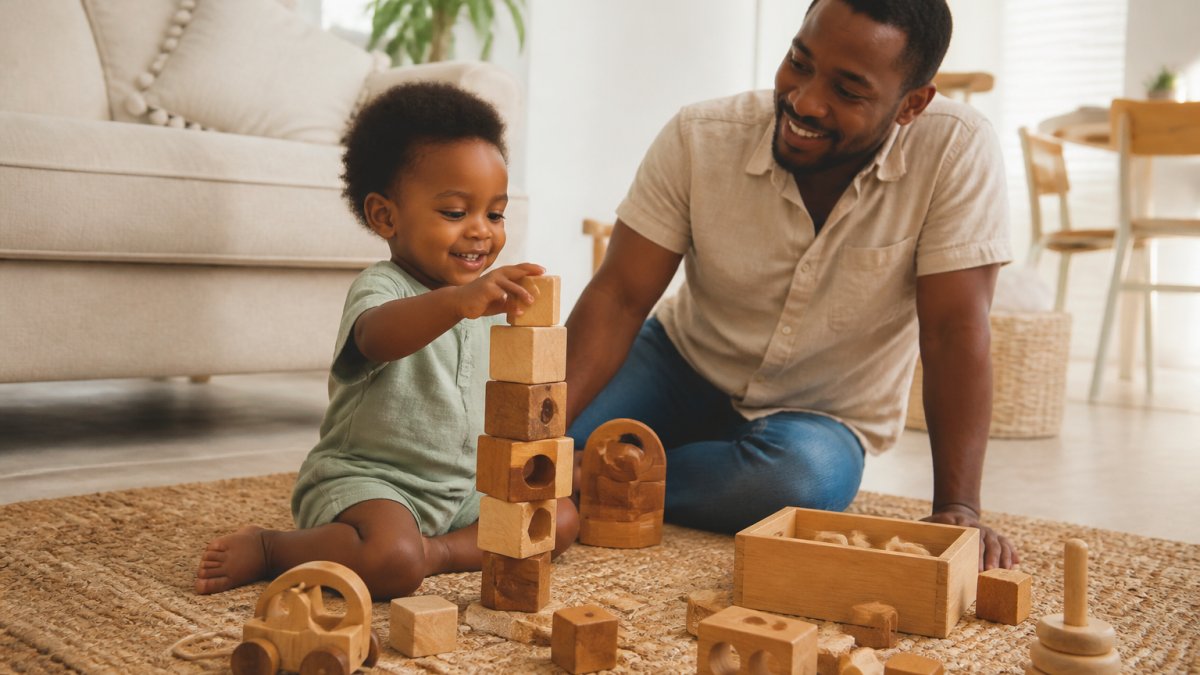
Wooden toys give toddlers two things plastic rarely matches: they last, and they teach. A solid wooden shape sorter or set of blocks survives dropping, chewing and being handed down to a younger sibling.
A wooden toy is only as safe as what coats it. Look for non-toxic finishes and water-based paints, and avoid pieces with a strong chemical smell or flaking paint.
How to Check Certifications and Avoid Greenwashing
Greenwashing is the practice of using environmental language to make a product seem more responsible than it is. The fix is simple: ask for a specific certification, then verify it, because vague phrases like "eco-friendly" carry no weight.
When a product page makes sustainability claims, ask whether a named certification is stated, whether it covers the material, finish or whole product, and whether the certifying body lists that product. If a seller cannot answer these, treat the claim as unproven. Reputable sellers welcome the questions, because it separates them from counterfeit goods.
Cost, Care and the Second-Hand Market
Sustainable toys often cost more upfront, and that is the honest trade-off. The value comes from how long they last and how rarely you replace them, so a durable wooden set that passes through three children usually works out cheaper than three short-lived plastic alternatives.
Three habits protect that value: buy for the stage rather than the moment, wipe wooden pieces with a damp cloth and wash fabric toys per the label, and pass them on, since wooden and fabric toys hold hand-me-down value far better than brittle plastic. Untreated wood or wood finished with water-based paint can often be repurposed or composted, and natural fibres break down rather than lingering for generations.
| Material | Best For | Care | End of Life |
|---|---|---|---|
| Solid wood | Toddlers, building play | Wipe with damp cloth | Repurpose or compost if untreated |
| Organic cotton | Babies, comfort toys | Machine wash per label | Biodegradable |
| Recycled plastic | Outdoor and bath toys | Rinse and air dry | Recyclable where facilities exist |
Encouraging Environmental Awareness Through Play
Children learn values through repetition, and toys are part of that lesson. Explaining why you chose a wooden toy over a plastic one plants a small idea about waste reduction that grows with them. Keep it practical rather than preachy: let your child help sort toys for donation, show them how a repaired toy keeps working, and talk about where things come from and where they go.
Where MasterKids Fits In
Choosing well takes time, and most parents are short of it. MasterKids is an online destination for safe, high-quality toys, STEM kits and educational resources for every stage from newborn to teenager, with nationwide delivery across Nigeria. Every product we stock is selected with safety and durability in mind, keeping unsafe and counterfeit items out of Nigerian homes.
Our customers tell us the difference shows. "Love it! Thank you!" says Teniola O. "I appreciate the swift response," adds Jonathan O.
If you are unsure which toy suits your child's age, our team can help you choose. Check our website for the latest details.
Frequently Asked Questions
Why is sustainability important for children?
Sustainability matters for children because it directly affects their health and the world they inherit. Sustainable toys are made without harmful chemicals like BPA and phthalates, reducing exposure to toxins during critical developmental years. They also teach children to value resources and care for the environment. Choosing sustainable toys supports your child's wellbeing today while building habits that benefit the planet tomorrow.
Are organic cotton plush toys safer for newborns?
Yes, organic cotton plush toys are generally safer for newborns. They are grown without synthetic pesticides and finished without harsh chemical dyes, making them gentler on a baby's sensitive skin. Unlike some mass-produced plastic alternatives, organic cotton toys are also free from BPA and phthalates. Always check for non-toxic finishes and water-based paints to be certain the toy meets safety expectations.
How can parents identify authentic eco-friendly toys?
Look for certifications such as FSC-certified wood and clear labels stating BPA-free and phthalate-free materials. Reputable sellers provide details on non-toxic finishes and sustainable sourcing. Be wary of vague claims like 'natural' without proof, which can signal greenwashing. Buying from trusted retailers that curate safe, high-quality products helps you avoid counterfeit items and ensures you get genuine eco-friendly toys for your child.
Choosing sustainable toys is a small daily decision with a long reach: safer materials for your child now, less waste for the world they will grow into, and better value for your budget over the years. At MasterKids, we make that choice easier with curated picks for every stage of childhood, a focus on STEM and educational development, and a safe, high-quality selection you can trust. Shop with MasterKids and give your child toys built to last and made to teach.