
 ultimate-guide
Benefits of Robotics for Child Development: 2026 Guide
Table of Contents
- How Robotics Builds Problem-Solving Skills
- The Benefits of Coding for Kids
- Affordable STEM Kits for Primary Students
- How to Choose a STEM Kit
- Frequently Asked Questions
Last Updated: September 28, 2026
How Robotics Builds Problem-Solving Skills
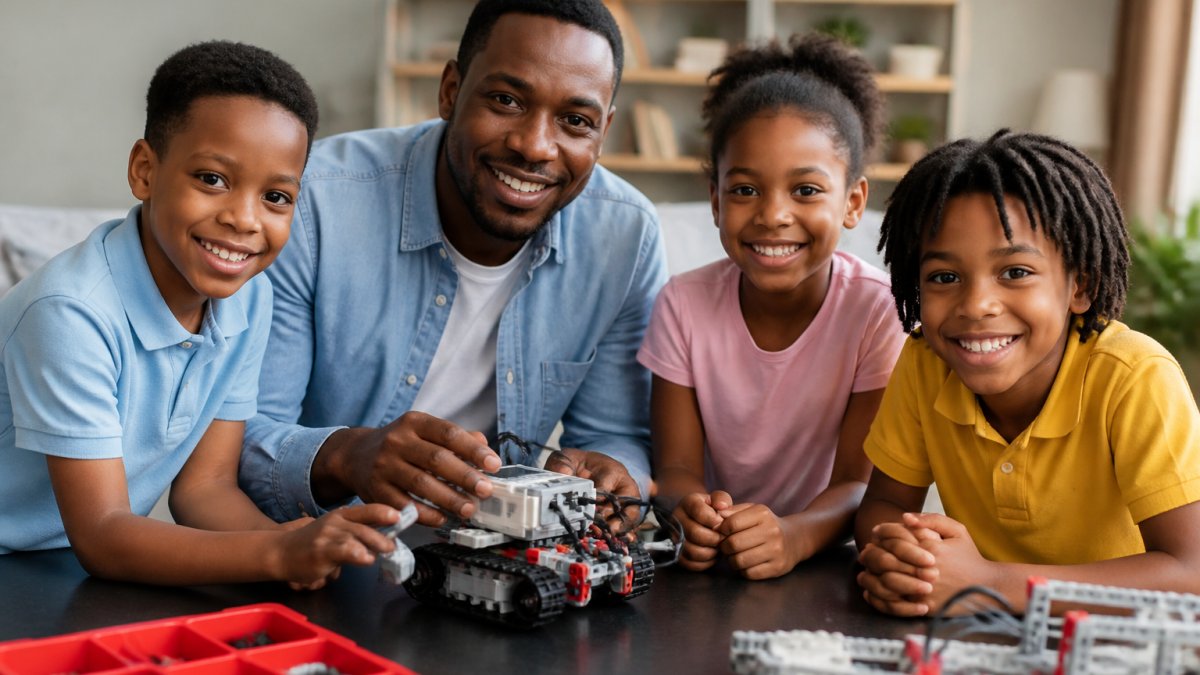
Robotics for child development works because it turns abstract thinking into something a child can hold, break, and rebuild. At MasterKids, we see this every day: a child who struggles with a maths worksheet will happily spend an hour adjusting a wheel until a robot rolls straight. The difference is feedback they can see.
Learning Through Trial and Error
Nobody gets a robot right on the first build. A wheel sits too tight, a wire connects to the wrong port, a sensor points the wrong way. Each failure gives the child a clue, and each fix teaches cause and effect.
The Benefits of Coding for Kids
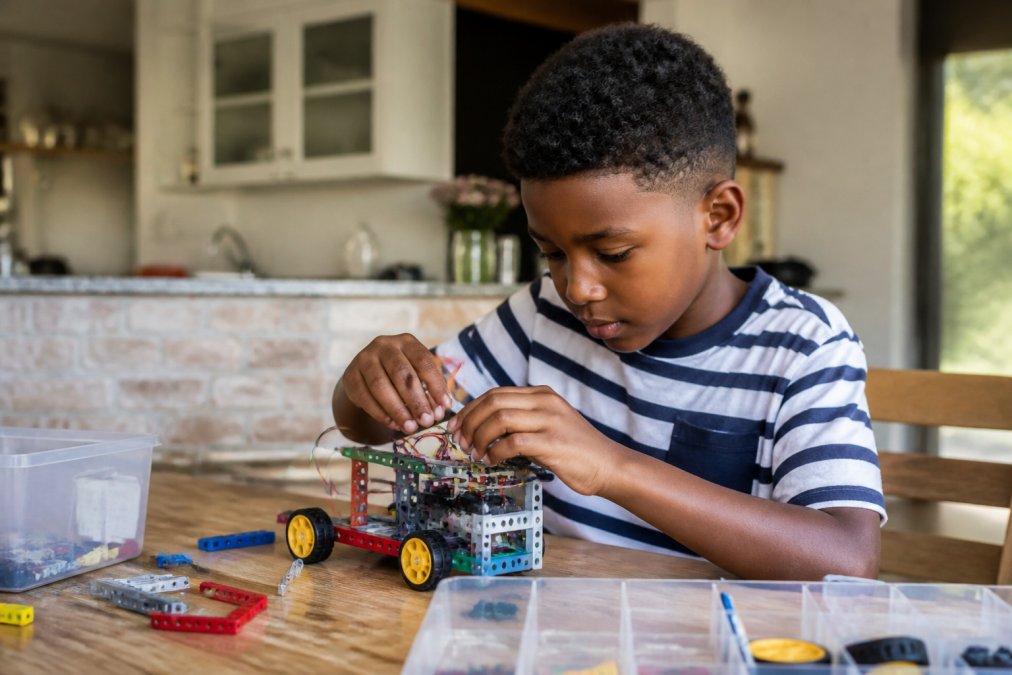
Coding for kids builds the same skills as reading and arithmetic, only in a language children can run and watch move. The benefits of coding for kids stretch well beyond screens: sharper focus, better sequencing, and the confidence to solve a problem step by step.
A child who codes learns that big tasks break into small instructions. That habit carries into schoolwork, chores, and eventually work.
From Block Coding to Real Programming
Start with drag-and-drop blocks, where children snap commands together like puzzle pieces. No reading required, just logic. Once they understand sequences and loops, move to text-based languages such as Scratch, then Python.
The jump feels big, so keep it gradual. Let them rebuild a project they already know in the new language.
Affordable STEM Kits for Primary Students
Affordable STEM kits for primary students do not have to mean flimsy parts or boring projects. The best kits balance cost with durability, so a child can build, take apart, and rebuild without the set falling to pieces. The real test is not what the box costs on the day you buy it, but how many times it gets opened in the following year.
What Actually Matters When You Compare Kits
What to Check | Why It Matters | What to Avoid |
|---|---|---|
Reusable parts | Survives repeated builds and rebuilds | One-time kits with glued or snap-lock parts |
Clear instructions | Child can build with minimal adult help | Text-heavy manuals with no pictures |
Age guidance | Matches the child's fine-motor and reading level | Kits marked "8+" handed to a five-year-old |
Spare components | Replaces lost pieces without a new purchase | No spares and no support |
Build variety | Keeps the kit in use past the first weekend | A single project with no extension ideas |
Local support and delivery | You can get help or replacement parts | No local supplier or returns path |
Match the Kit to the Stage, Not the Label
Age labels on boxes are a rough guide at best. What matters is the stage your child has reached.
- Ages 3 to 5: Large, chunky pieces that snap or click together. No tiny screws, no loose wiring. The goal is cause and effect, press a button, watch something move. Look for kits with a handful of big parts and one or two outcomes.
- Ages 6 to 9: Simple motor-and-gear sets, basic wheels and axles, and introductory block coding where commands are dragged and dropped rather than typed. This is where sequencing and loops start to click.
- Ages 10 to 14: Kits with sensors, more complex mechanisms and a path into text-based programming. At this stage the child should be able to plan a build, test it, and improve it without step-by-step hand-holding.
Hardware and Software Are Not the Same Skill
How to Choose a STEM Kit
Choosing the right STEM kit comes down to three things: your child's age and stage, their patience, and how much help you can realistically give. Match all three and the kit gets used. Miss one and it ends up in a corner. Most guides stop there. What they rarely give you is a roadmap for how the kit should change as the child grows, or honest advice on what the parent's role looks like at each stage.
Questions to Ask Before You Buy
- Can my child follow the instructions alone, or will I need to sit with them?
- Does the kit have more than one project, so it does not run out in a weekend?
- Are the parts sturdy enough for repeated building?
- Is there room to grow, or will they outgrow it in a month?
- Does the kit match my child's stage, not just their age on the box?
Frequently Asked Questions
At what age should a child start learning robotics?
Children can begin with simple robotics concepts from age four or five, using cause-and-effect toys and basic building blocks. Between ages seven and ten, they can move to kits with sensors and block-based coding. Teenagers benefit most from advanced kits involving text-based programming. The key is matching the kit to your child's current abilities, not pushing them too fast. Start simple, observe their interest, and upgrade gradually as their skills grow.
How do robotics kits improve problem-solving skills?
Robotics kits present children with open-ended challenges that have no single correct answer. When a robot does not move as expected, the child must examine each step, identify the fault, and try a different approach. This cycle of trial and error builds resilience and logical reasoning. Over time, children learn to break large problems into smaller parts, a skill that transfers directly to mathematics, science, and everyday decision-making.
Can robotics help children develop social and emotional skills?
Yes. Many robotics projects work best when two or three children collaborate, sharing parts, discussing ideas, and solving disagreements. This builds teamwork, patience, and communication. Children also experience frustration when a build fails, which teaches emotional regulation and persistence. Celebrating a finished project together boosts self-esteem. For quieter children, robotics offers a shared activity that makes social interaction feel natural rather than forced.
How does robotics education support STEM learning?
Robotics brings abstract STEM concepts into the physical world. A child who programs a robot to turn a corner is applying geometry, measurement, and sequencing without realising it. Sensor technology introduces basic physics, while coding develops computational thinking. This hands-on approach makes science and mathematics memorable because children see immediate results. It also introduces mechanical engineering ideas such as gears, axles, and balance in a way textbooks cannot match.
The challenge most parents face isn't interest, it's finding kits that are safe, durable, and genuinely worth the money. MasterKids curates every product with that in mind, offering STEM kits for every stage of childhood, a focus on safe and high-quality materials, and affordable options that don't fall apart after a week. Get started with MasterKids and give your child a head start through learning-based play.