
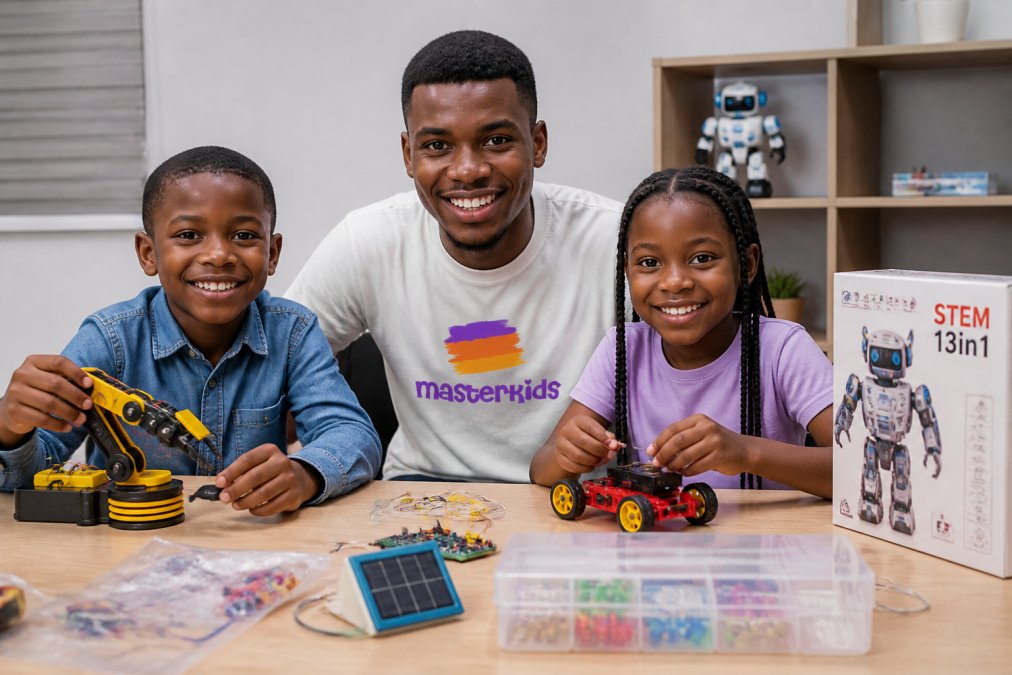
 listicle
Best STEM Kits for Kids: A 2026 Guide
Table of Contents
- Why STEM Kits Matter for Children's Development
- How to Choose STEM Toys for Different Age Groups
- Top STEM Kits and Educational Resources Available
- Finding Quality STEM Kits That Last
- Frequently Asked Questions
Last Updated: August 31, 2026
Best STEM Kits for Kids: A 2026 Guide
Why do some children thrive in science and technology whilst others lose interest by secondary school? The answer often lies in early exposure to hands-on learning. STEM kits for children build critical thinking, problem-solving, and innovation skills. Finding the right ones matters.
At MasterKids, we've curated a selection of STEM kits available for children across every age group. This guide explains what makes STEM education valuable, how to match kits to your child's age and interests, and where to find quality resources that hold a child's attention.
Why STEM Kits Matter for Children's Development
Science, technology, engineering, and mathematics form the foundation of how children understand the world. STEM kits transform abstract concepts into tangible, hands-on experiences, precisely how young minds learn best.
When children build circuits, code robots, or construct structures, they develop logical reasoning and creative design thinking simultaneously. They learn to troubleshoot when something doesn't work, building resilience and problem-solving confidence. A child assembling a motorised kit isn't just following instructions; they're understanding mechanics, spatial relationships, and cause-and-effect thinking.
How to Choose STEM Toys for Different Age Groups
Age matters enormously when selecting STEM kits. The best approach is matching complexity, materials, and learning outcomes to your child's developmental stage.
Ages 3-5: Introduction to Hands-On Play
Focus on wooden puzzles, basic building sets, and motorised toys that don't require reading or complex assembly. Children develop fine motor skills and learn how objects fit together. Look for kits with large, safe pieces and bright colours.
Ages 6-9: Building Logical Reasoning
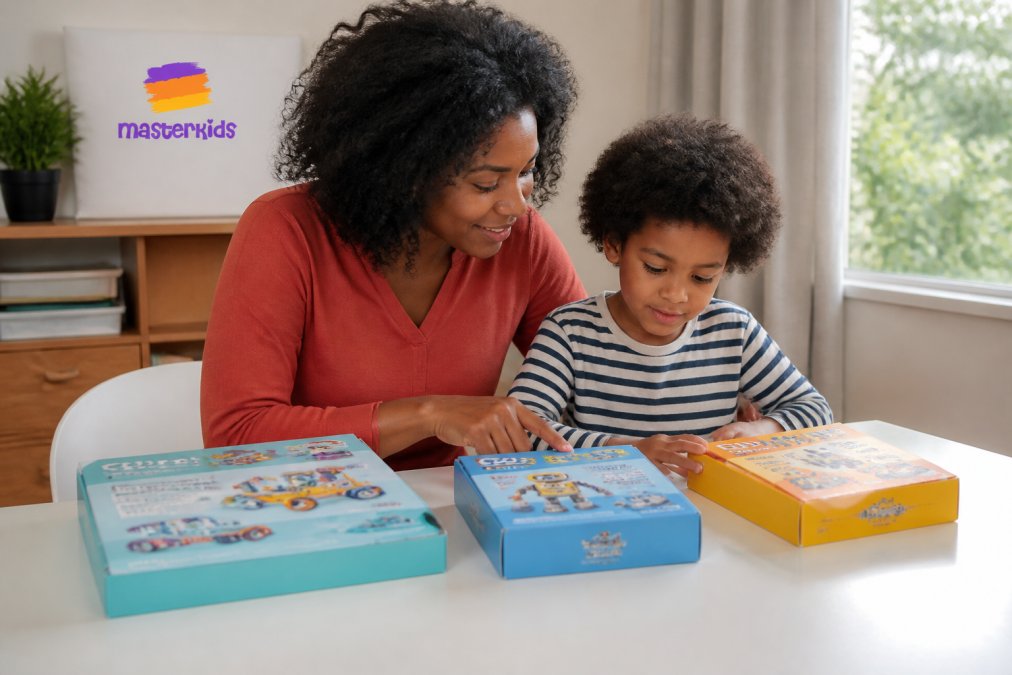
Coding toys, robotics starter sets, and construction kits with written instructions become appropriate. Children can follow multi-step processes and understand simple programming concepts. Kits typically introduce circuitry, basic engineering principles, and projects taking 30 minutes to an hour.
Ages 10-14: Advanced Problem-Solving
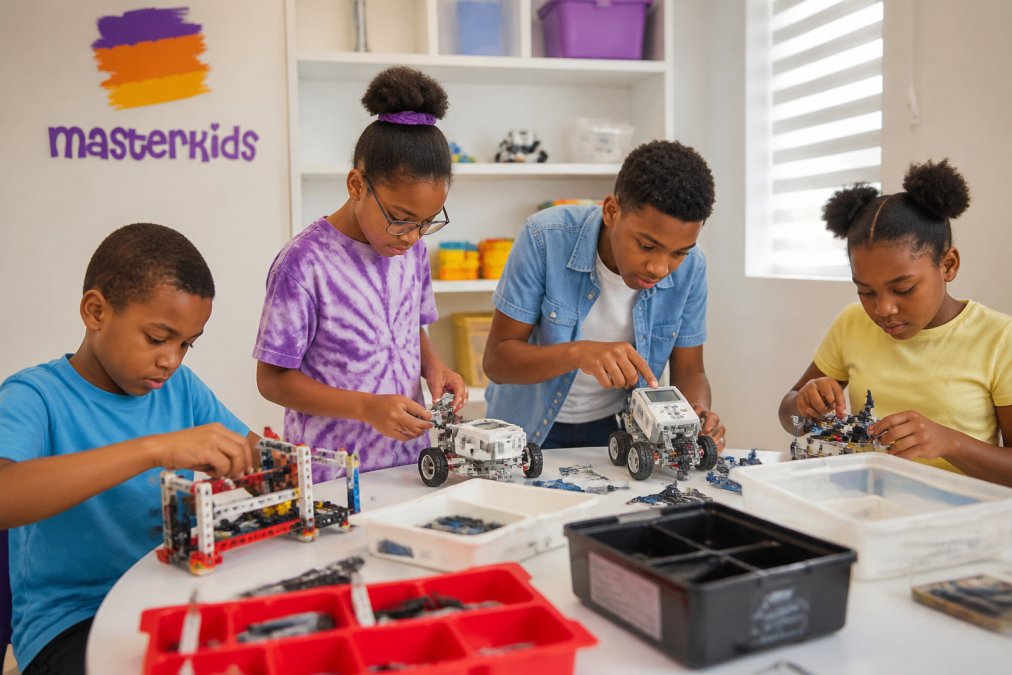
Teenagers benefit from sophisticated robotics, advanced coding platforms, and engineering projects requiring research and planning. These kits involve multiple components and longer assembly times, keeping engagement high.
Top STEM Kits and Educational Resources Available
Quality STEM kits share common characteristics: clear instructions, durable materials, and learning outcomes matching the marketing claims.
MasterKids stocks a carefully selected range of STEM kits designed to meet these standards. When evaluating any STEM kit, look for clear age recommendations, durable materials, followable instructions, logical learning progression, and pieces designed to prevent frustration.
The most common mistake parents make is buying the flashiest kit without checking whether it matches their child's skill level. A kit that's too advanced sits abandoned; one that's too simple bores within days.
Finding Quality STEM Kits That Last
Durability separates worthwhile investment from wasted money. Many STEM kits are manufactured with cost as the primary concern, resulting in plastic components that snap and motors that fail quickly.
MasterKids is committed to discouraging and extinguishing unsafe, counterfeit and low-quality items from the Nigerian Market. Every kit undergoes safety verification and durability assessment. When you purchase through us, you're getting verified products with nationwide delivery. Beyond durability, consider whether a kit offers genuine value. Price differences often reflect packaging and branding rather than educational superiority.
The right STEM kit transforms how a child sees science and technology, from abstract school subjects into tangible possibilities. Start with age-appropriate kits matching your child's current skills, observe what captures their genuine interest, and build from there.
Explore MasterKids's curated STEM collection to find kits designed for every stage of childhood development. Our nationwide delivery means quality educational resources reach your home reliably, and our commitment to safety standards means you're investing in products that genuinely prepare young minds for the future.
Frequently Asked Questions
Q: What makes the best STEM kits for kids effective?
A: The best STEM kits combine hands-on learning with clear progression. Look for kits that encourage problem-solving, allow children to build real projects, and support multiple learning styles. Quality materials ensure durability through repeated use. Educational toys that align with school curricula help reinforce classroom learning whilst keeping children engaged at home. MasterKids offers a curated selection of kits that balance challenge with achievement, so children stay motivated.
Q: How do I choose STEM toys for different age groups?
A: Age-appropriate selection depends on developmental milestones. Younger children (ages 4-6) benefit from motorised kits and wooden puzzles that build logical reasoning. Primary school children (ages 7-11) thrive with coding basics and building sets that teach engineering principles. Teenagers (ages 12+) engage with advanced robotics and circuitry projects. Always check kit recommendations on packaging and consider your child's interests, a child passionate about construction will engage differently than one interested in coding.
Q: Are STEM kits effective for home-based learning?
A: Yes, STEM kits are excellent for home learning. They provide interactive learning that complements classroom education and develop critical thinking and innovation skills outside school hours. Hands-on projects help children apply theoretical knowledge to practical problems. For after-school enrichment, kits keep children intellectually engaged whilst building technical proficiency. The key is choosing kits matched to your child's level and interests so learning feels like play, not homework.
This article was written using GrandRanker