 listicle
Science Toys for Kids: A 2026 Guide
Table of Contents
- Best Science Toys for Kids Across Age Groups
- Benefits of STEM Learning for Children
- How to Choose Science Kits for Kids
- Affordable STEM Kits for Primary Students
Last Updated: August 25, 2026
Science Toys for Kids: A 2026 Guide
When children engage with science toys for kids, they're building cognitive foundations that shape how they approach problems for life. Access to the right tools determines whether a child explores and experiments or passively consumes entertainment. 🧪
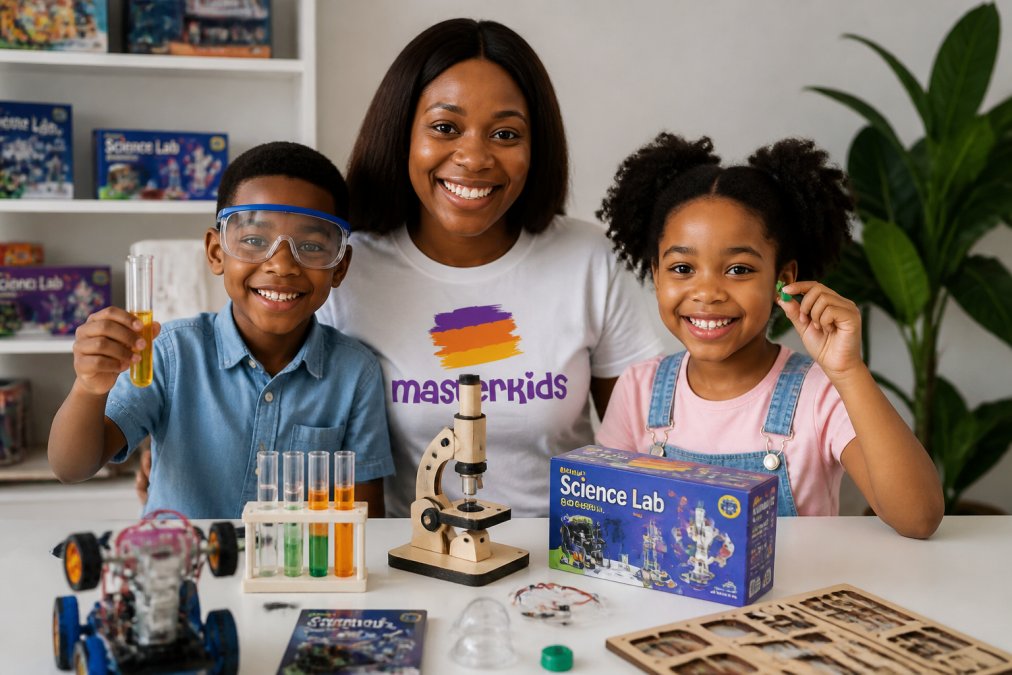
At MasterKids, we've curated science toys designed to spark curiosity whilst meeting rigorous safety standards. Our mission is straightforward: get affordable, high-quality educational resources into the hands of every Nigerian child, whilst protecting them from counterfeit products that flood the market.
Best Science Toys for Kids Across Age Groups 🎯
The right science toy depends entirely on your child's developmental stage.
For ages 3-5: Sensory exploration kits with tactile elements work best, kinetic sand, water beads, and basic colour-mixing experiments. Children build fine motor skills and learn cause-and-effect relationships. All pieces must be large enough to prevent choking hazards, and parents should always check product labelling for safety warnings.
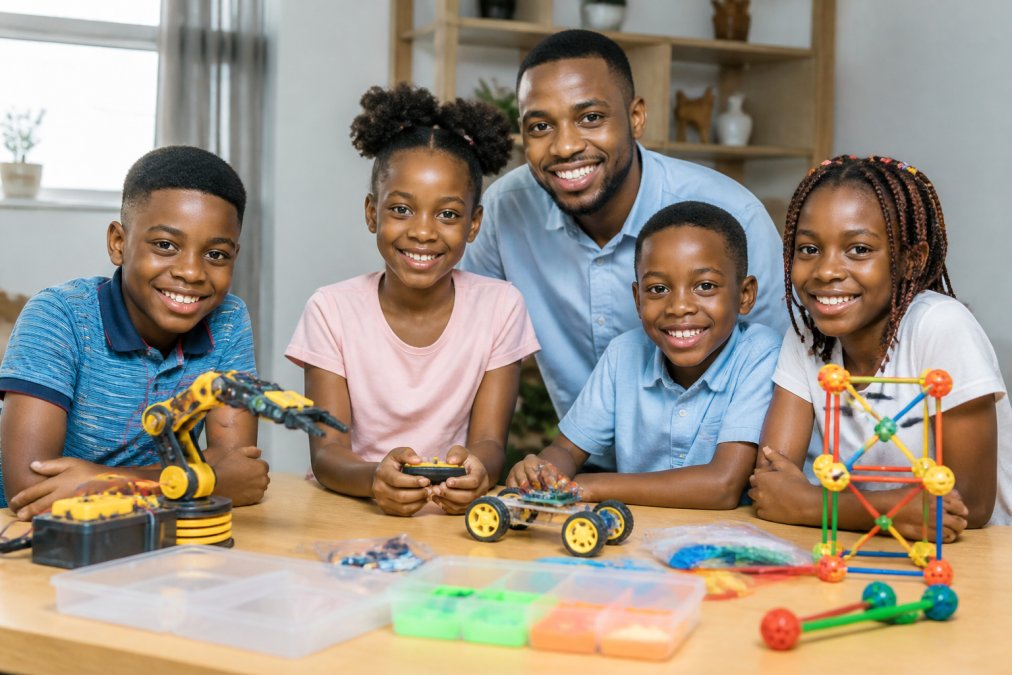
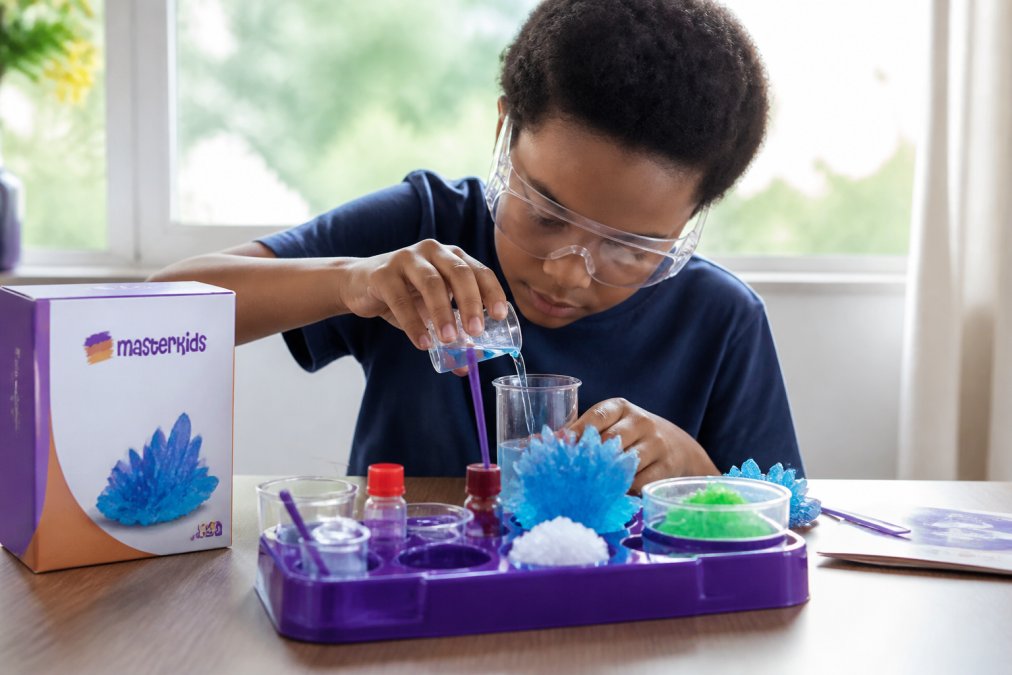
For ages 6-8: Hands-on STEM learning truly begins here. Building blocks, beginner chemistry sets, and simple robotics kits engage logical reasoning. A crystal-growing kit that produces visible growth over a week keeps them engaged.
For ages 9-12: Intermediate science kits with more complex assembly appeal to this group. Coding robots, advanced chemistry sets, and engineering challenges work well. They can follow multi-step instructions and understand delayed gratification.
For ages 13+: Advanced robotics, coding platforms, and real laboratory-style chemistry sets match teenage cognitive abilities. They can troubleshoot problems independently and think abstractly.
Benefits of STEM Learning for Children 🧠
Science toys for kids deliver measurable developmental benefits extending far beyond the toy box.
Critical thinking develops through experimentation. When a child builds a robot, tests it, and adjusts the code because it didn't work the first time, they're learning to diagnose problems and iterate, mirroring real-world problem-solving.
Curiosity becomes self-directed. Children who engage with science toys ask more questions and notice cause-and-effect in everyday life. This natural curiosity becomes the engine for lifelong learning.
Spatial awareness and motor skills improve. Building sets and robotics strengthen neural pathways responsible for spatial reasoning, correlating with better mathematics performance later on ([EXTERNAL_LINK: peer-reviewed research on spatial reasoning and mathematics | pmc.ncbi.nlm.nih.gov]).
Confidence grows through tangible achievement. A child who successfully grows crystals or builds a working robot has proof of their capability. This builds genuine self-efficacy through real accomplishment.
How to Choose Science Kits for Kids 🔍
Selecting the right kit requires balancing age-appropriateness, safety standards, durability, and genuine engagement potential.
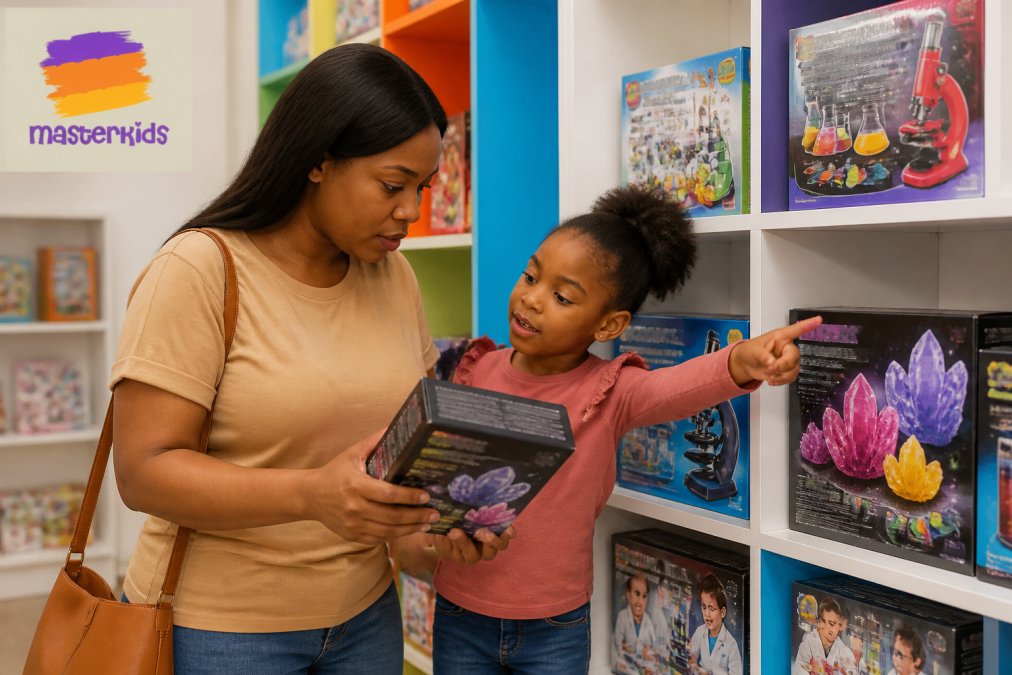
Check safety credentials first. In Nigeria's market, counterfeit products are a genuine concern. Reputable science toys for kids come with clear labelling of materials, age recommendations, and safety certifications. Consumers should look for products that comply with recognised international safety standards for toys, such as those adopted by the Standards Organisation of Nigeria (SON). MasterKids verifies every product against international safety standards before it reaches your hands.
Match complexity to your child's abilities. A kit that's too simple bores them quickly; one that's too complex frustrates them into abandonment. Read age ranges carefully and consider your child's specific maturity level.
Assess durability honestly. Quality materials last through repeated use and multiple children, whilst cheap plastic breaks easily.
Look for clear instructions. Confusing manuals make the experience frustrating rather than educational. MasterKids prioritises products with step-by-step guidance.
Affordable STEM Kits for Primary Students 💡
Budget constraints are real for many families. The good news: affordable doesn't mean low-quality.
Entry-level chemistry sets offer genuine learning, demonstrating basic chemical reactions with safe, non-toxic compounds.
Building and construction kits deliver exceptional value. A quality set of interlocking blocks can be used for hundreds of different projects and grows with your child's creativity.
DIY experiment kits using household materials keep costs minimal whilst teaching scientific method, growing seeds, making volcanoes with baking soda and vinegar, or exploring density with layered liquids.
Robotics entry kits have become more affordable in recent years. Basic coding robots teach programming logic without requiring expensive computers, often working with tablets or phones your family already owns.
Conclusion
Choosing the right science toys for kids is an investment in their cognitive development, curiosity, and confidence. The products available through MasterKids have been selected specifically for safety, durability, and genuine educational value, eliminating the risk of counterfeit items whilst keeping prices accessible for Nigerian families. With nationwide delivery, you can access our curated selection of science toys and STEM kits no matter where you are in Nigeria.
Visit MasterKids today to browse our full range of science toys and STEM kits. Each product comes with our commitment to safety, affordability, and developmental benefit.
SHOP the full range now and get your child learning through play.
Frequently Asked Questions
What are the best science toys for primary school students?
The best science toys for primary school students combine hands-on experimentation with age-appropriate complexity. Crystal-growing kits, solar system models, and beginner robotics sets encourage scientific inquiry and problem-solving skills. Look for toys that align with the school curriculum and allow children to explore topics like chemistry, physics, and biology through interactive play. MasterKids offers a curated selection of science toys designed specifically for primary-age learners that balance educational value with engagement.
How do STEM kits help with a child's cognitive development?
STEM kits foster critical thinking, logical reasoning, and spatial awareness by encouraging children to experiment, observe outcomes, and adjust their approach. Hands-on learning through robotics, building blocks, and chemistry sets activates multiple learning pathways, strengthening problem-solving abilities and creativity. These interactive experiences build confidence in scientific inquiry and prepare children for future academic success. Research shows children who engage with STEM toys develop stronger foundational skills in mathematics and science.
Are science toys suitable for all age groups?
Yes, science toys are available for every developmental stage, from sensory play for infants to advanced robotics for teenagers. Age-appropriate options ensure safety and engagement. Younger children benefit from discovery-based toys that develop motor skills and curiosity, whilst primary students thrive with structured experiments, and teenagers engage with complex coding and robotics challenges. Always check age recommendations on packaging to ensure the toy matches your child's developmental level and interests.
This article was written using GrandRanker