 ultimate-guide
Benefits of Sensory Play for Early Childhood Development
Table of Contents
- What Sensory Play Is and Why It Matters for Early Childhood Development
- Key Developmental Benefits of Sensory Play Activities for Toddlers
- Sensory Play Ideas for Babies and Safe Sensory Play Activities
- Frequently Asked Questions
Last Updated: October 8, 2026
What Sensory Play Is and Why It Matters for Early Childhood Development
Sensory play is hands-on, child-led exploration through touch, sight, sound, smell, and taste, with no preset goal.
At MasterKids, we believe the benefits of sensory play for early childhood development are foundational: grasping a textured toy or pouring water between containers builds neural connections and teaches cause and effect.
The benefits of sensory play for early childhood development go beyond keeping children occupied. Research shows it supports motor skills, language, cognitive growth, and emotional regulation, building problem-solving abilities and confidence.
Key Developmental Benefits of Sensory Play Activities for Toddlers
Sensory play activities for toddlers drive several areas of development at once. 🧠 Fine motor skills strengthen through grasping and pinching, gross motor skills through balance and movement, and language grows as caregivers name textures, colours, and sensations.
Cognitive development accelerates because sensory exploration teaches cause and effect, dropping a spoon into water is learning physics, while problem-solving emerges when toddlers work out how to fill containers.
Emotional development happens quietly: sensory play builds self-regulation as children manage responses to different textures, so a child who resists touching sand may gradually become comfortable.
Sensory Play Ideas for Babies and Safe Sensory Play Activities
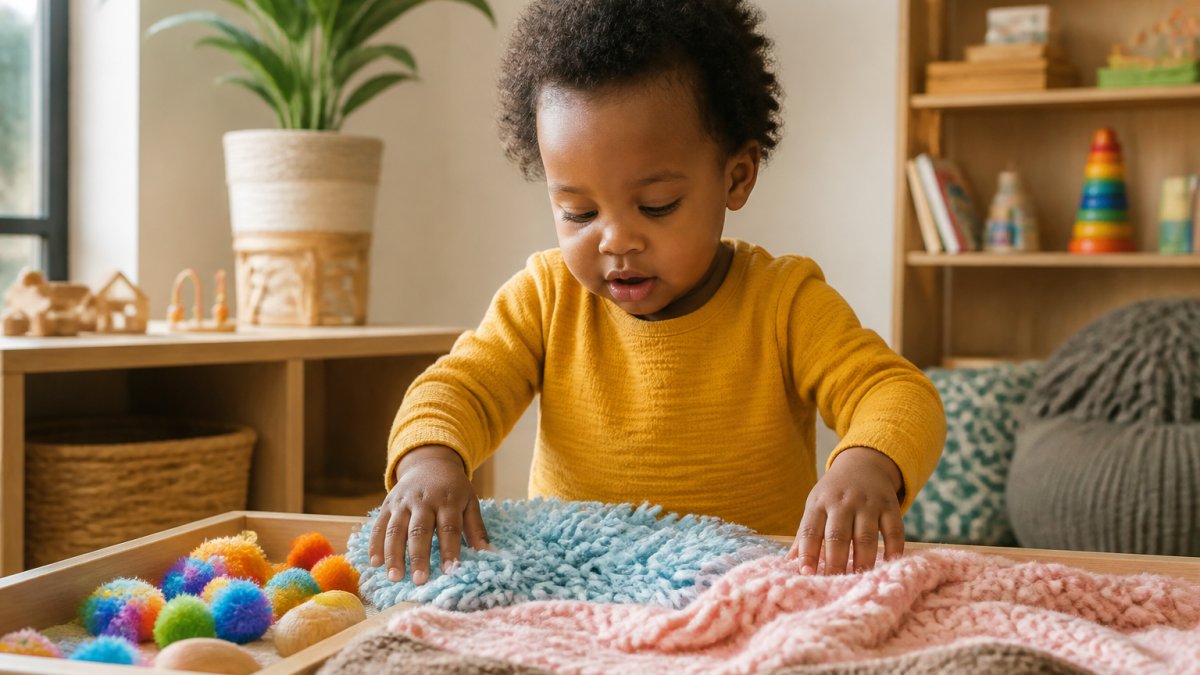
Safe sensory play activities start with supervision and age-appropriate materials. For babies under 12 months, focus on soft textures, safe sounds, and visual stimuli.
For toddlers aged 1-3, expand to shallow water play, supervised food-grade kinetic sand, natural materials, and household items like plastic containers and wooden spoons.
Common mistakes include offering choking hazards, leaving children unsupervised, and introducing textures a child finds distressing. If a child pulls away consistently, respect that boundary.
Low-cost, low-mess activities work brilliantly: dry rice or pasta in a shallow tray, ice cubes for temperature exploration, sealed containers with dried beans as sound shakers, or a water station with cups and funnels.
When sensory play feels uncomfortable (texture sensitivity, sound aversion, or sensory processing differences), adapt rather than push. A child may prefer to observe first or need calmer input; inclusive sensory play respects individual differences.
The real challenge isn't knowing that sensory play matters, it's creating regular opportunities without overthinking the setup. Water, sand, safe household objects, and 15 minutes of uninterrupted time are enough. At MasterKids, we've curated safe, high-quality sensory toys and exploration kits for every stage of early childhood, from newborns through preschoolers. Our products meet rigorous safety standards and encourage the open-ended, child-led exploration that drives real development. With nationwide delivery, you can access our full range of sensory play resources wherever you are, making it easier to build these essential experiences into your child's routine. 🌟
Frequently Asked Questions
What is the definition of sensory play in early childhood?
Sensory play is open-ended exploration where children engage their five senses, touch, sight, sound, smell, and taste, through hands-on activities. It includes touching different textures, listening to sounds, exploring colours, and investigating materials. This type of play helps young children make sense of their surroundings and supports brain development through direct experience with their environment.
How does sensory play support brain development and neural connections?
When children engage in sensory play, they activate multiple areas of the brain simultaneously. Touching, listening, watching, and exploring stimulate neural pathways that strengthen connections between brain cells. This repeated sensory stimulation during early childhood builds the foundation for learning, memory, and problem-solving skills. The more varied sensory experiences a child has, the more robust their cognitive development becomes.
What are some simple sensory play ideas for babies using household materials?
Babies benefit from safe, supervised sensory exploration. Offer soft fabrics of different textures, containers to fill and empty with water or sand (under close watch), safe kitchen items like wooden spoons and plastic bowls, or sensory baskets filled with safe household objects. You can create sound shakers using sealed containers with rice or beans, or freeze small toys in ice for babies to explore as it melts. Always supervise closely and check that all materials are age-appropriate and pose no choking risk.