 ultimate-guide
A Parent's Guide to Educational Toys for Different Ages
Last Updated: October 30, 2026
Quick Summary
Educational toys are playthings chosen to match a child's developmental stage, so play naturally builds skills. For babies under twelve months, pick high-contrast rattles, soft blocks and activity gyms; for toddlers, open-ended blocks and puzzles; for primary school children, building sets and STEM kits.
- Choose fewer, better toys and always check every toy for loose eyes, buttons or beads.
- Toddlers learn by doing, so open-ended toys build fine motor skills and first words.
- Primary school children need toys that stretch thinking, such as science and STEM kits.
- Keep only a small selection of toys out and swap them every week or two.
- Sort toys by stage rather than by room, and retire what is outgrown.
Table of Contents
- Educational Toys for Babies
- Educational Toys for Toddlers
- Educational Toys for Primary School Children
- How to Organise an Educational Toy Rotation
- Frequently Asked Questions
Educational Toys for Babies
The best educational toys for babies are simple, safe, high-contrast objects that reward every reach, grasp and babble. At MasterKids, we curate these first toys carefully for babies' earliest months.
Educational toys are playthings chosen to match a child's developmental stage, so play naturally builds skills. For a baby under twelve months, that means cause and effect, tracking and hand control.
Choose fewer, better toys: high-contrast rattles and soft blocks, activity gyms for tummy time, cloth or board books, and textured teethers. Check every toy for loose eyes, buttons or beads, and follow the age label. For more reassurance, read this guide to safe toys for infants.
UNICEF early childhood development guidance is a useful reference for what babies actually need in the first year.
Here is a quick look at the toys that suit each stage.
| Age group | Suggested toys | Skills built |
|---|---|---|
| Babies under twelve months | High-contrast rattles, soft blocks, activity gyms, cloth or board books, textured teethers | Cause and effect, tracking, hand control |
| Toddlers, one to three years | Blocks, chunky puzzles, pretend-play sets, sorting games | Fine motor skills, early problem-solving, first words |
| Primary school children, roughly six to eleven years | Building sets, science and STEM kits, strategy games, craft materials | Early maths, literacy, spatial reasoning, problem-solving |
Educational Toys for Toddlers
Toddlers learn by doing, so the best educational toys for toddlers are open-ended: blocks, chunky puzzles, pretend-play sets and sorting games. Between one and three years, these build fine motor skills, early problem-solving and first words.
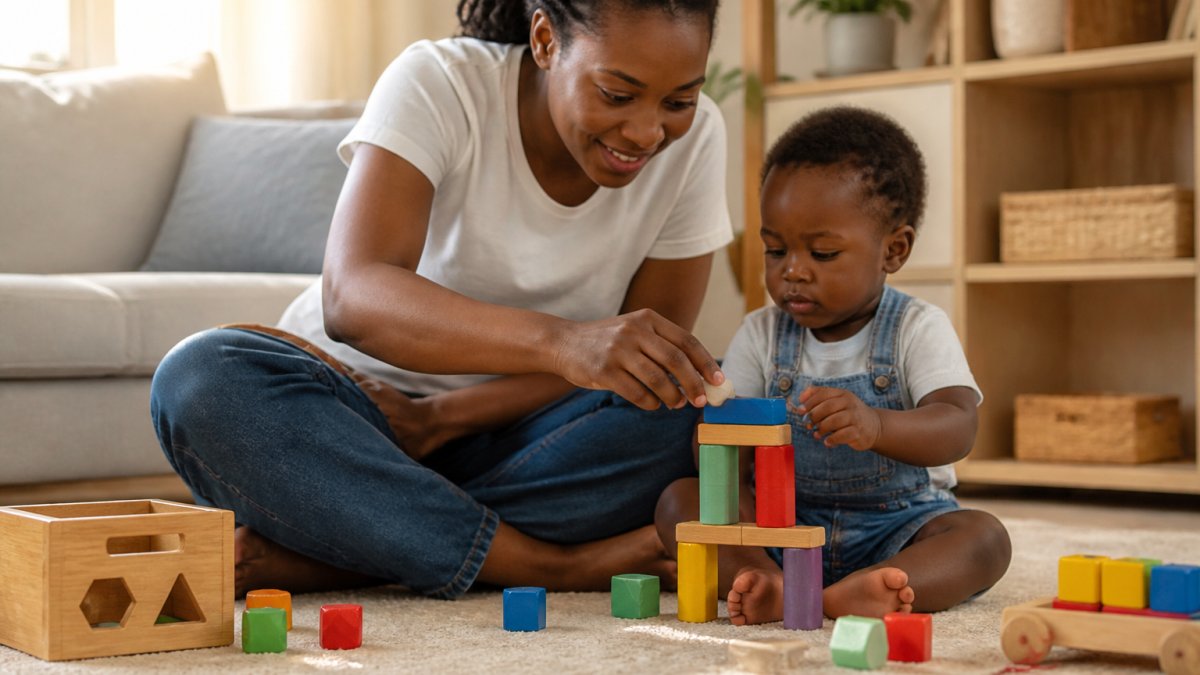
Buy to the stage, not the age on the advert. Shop MasterKids toys by stage, with nationwide delivery.
Educational Toys for Primary School Children
Primary school children need toys that stretch thinking: building sets, science and STEM kits, strategy games and craft materials. From roughly six to eleven years, these build early maths, literacy, spatial reasoning and problem-solving.
How to Organise an Educational Toy Rotation
A toy rotation is simple: keep only a small selection out at a time and swap them every week or two, so each set feels new again. It cuts clutter and makes the toys you own work harder.
Sort by stage, not by room. If you are unsure which stage suits your child, this guide to choosing toys for different ages helps you compare milestones. Swap toys every one to two weeks, storing the rest out of sight, and rotate by skill so each set covers something different. Retire what is outgrown.
Frequently Asked Questions
How do I choose an educational toy for my child's age?
Match the toy to what your child can already do and what they are just starting to try. For babies, look for rattles, activity gyms and stacking toys that build fine motor skills and sensory play. Toddlers need puzzles, sorting games and building sets for problem-solving and language development. Primary school children benefit from STEM kits and hands-on learning resources. Always check the age range on the pack, and pick toys from MasterKids that list clear developmental stages.
How can I tell if a toy is safe and age-appropriate?
Check the age label first, then inspect the toy itself. Avoid small parts that could be a choking hazard for children under three, look for smooth edges, and make sure batteries are secured behind a screw-fastened cover. Buy from a trusted source rather than open markets where counterfeit items are common. MasterKids selects products with safety and quality in mind, so you can shop with more confidence.
How often should I rotate my child's educational toys?
A simple educational toy rotation every two to three weeks keeps engagement high without overwhelming your child. Keep a small set of toys out, store the rest out of sight, then swap them. This makes old toys feel new again and encourages deeper independent play. Group toys by developmental stage so each rotation matches what your child is ready to learn, and keep favourite comfort toys available at all times.
Choosing the right educational toys for different ages comes down to matching the toy to the stage, buying fewer but better, and rotating what you own so nothing gathers dust. MasterKids helps you do exactly that, with curated picks for every stage of childhood, a focus on STEM and educational development, and a safe, high-quality product selection that keeps counterfeits out of your child's playroom. Get started with MasterKids and give your child toys that grow with them, delivered nationwide.