 listicle
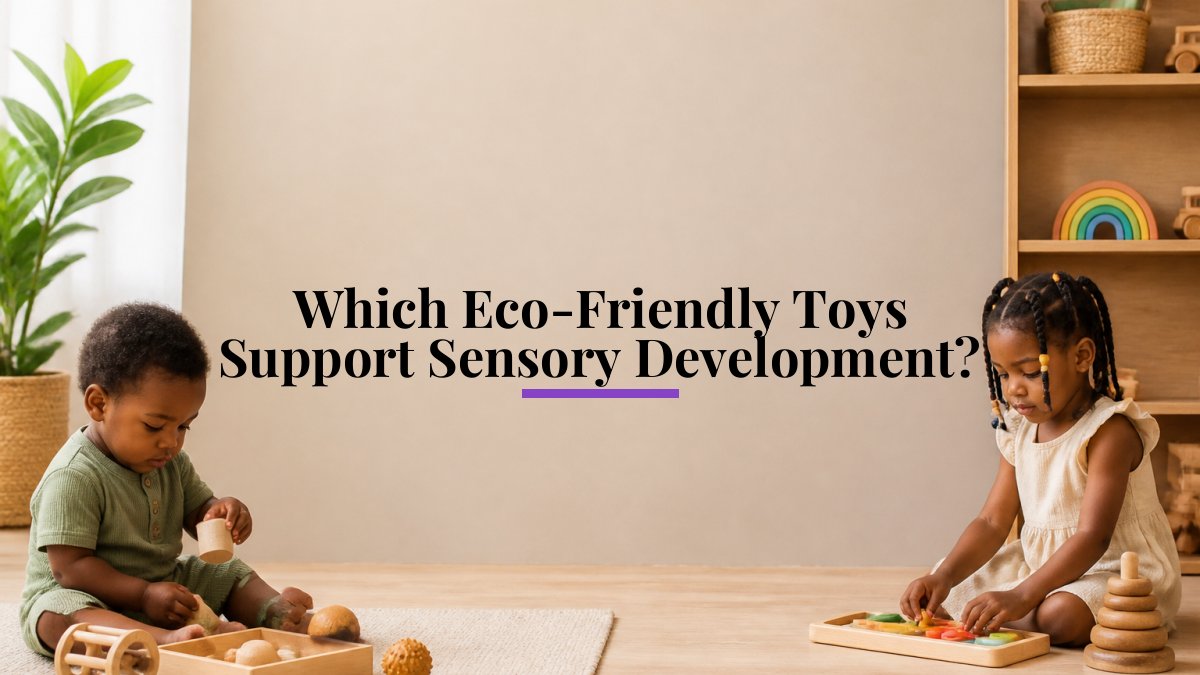
Which Eco-Friendly Toys Support Sensory Development?
Quick Summary
Wooden rattles, stacking rings, soft fabric trays and textured balls all support sensory development in toddlers. Choose solid wood, natural rubber, organic cotton or plant-based plastics, and pick open-ended toys that let the child decide how to play.
- Solid wooden rattles sound and feel different from plastic ones, helping babies tell them apart.
- Stacking rings and soft fabric trays can be used in many ways, building imagination and problem-solving.
- Check that toys are clearly labelled with materials and the recommended age range.
- Paints and finishes should be water-based and free from lead where labelled.
- Inspect toys for small parts, which pose a choking risk for children under three.
Table of Contents
- Eco-Friendly Toys That Build Sensory Skills
- Checking Toys Are Non-Toxic and Safe for Toddlers
- Choosing Your Next Sensory Toy from MasterKids
- Frequently Asked Questions
Eco-Friendly Toys That Build Sensory Skills
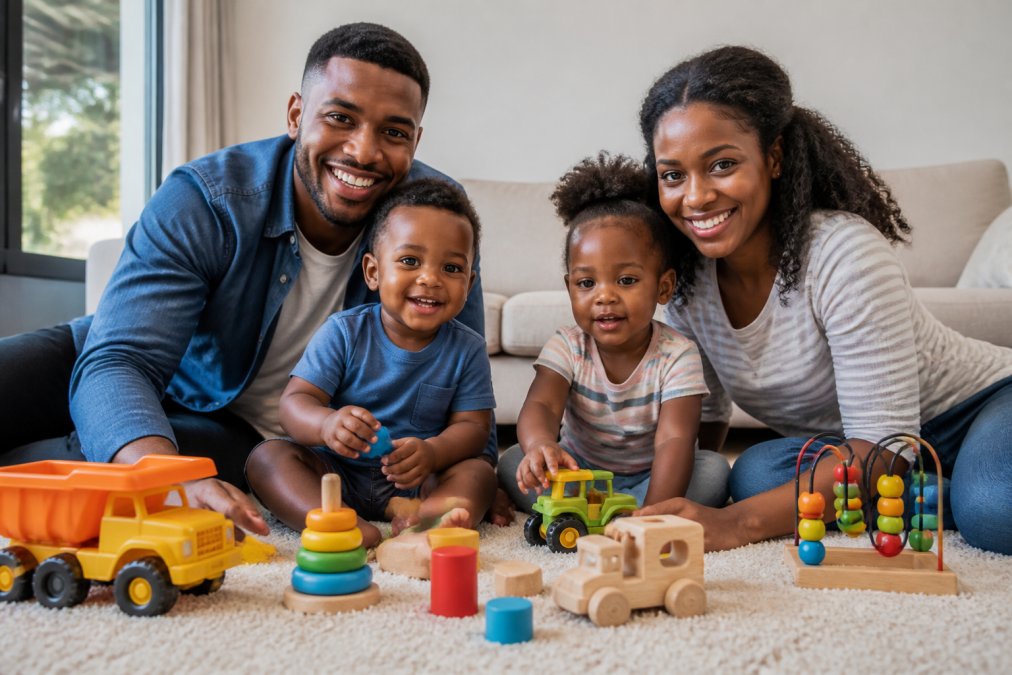
Most toddlers learn through their hands first. A rattle, textured ball or smooth wooden block gives a baby something to grip, shake and explore, the heart of sensory play and early sensory development.
Look for solid wood, natural rubber, organic cotton and plant-based plastics where possible. A wooden rattle, for example, sounds and feels different from a plastic one, helping babies tell the two apart. Find developmental toys for newborns that match this stage of growth.
Choose toys that invite open-ended play. Stacking rings or a soft fabric tray can be used many ways, so the child decides what happens next, building imagination, problem-solving skills and sensory development over time.
Browse our developmental toys for newborns (page:1) to find options that suit your child's stage.
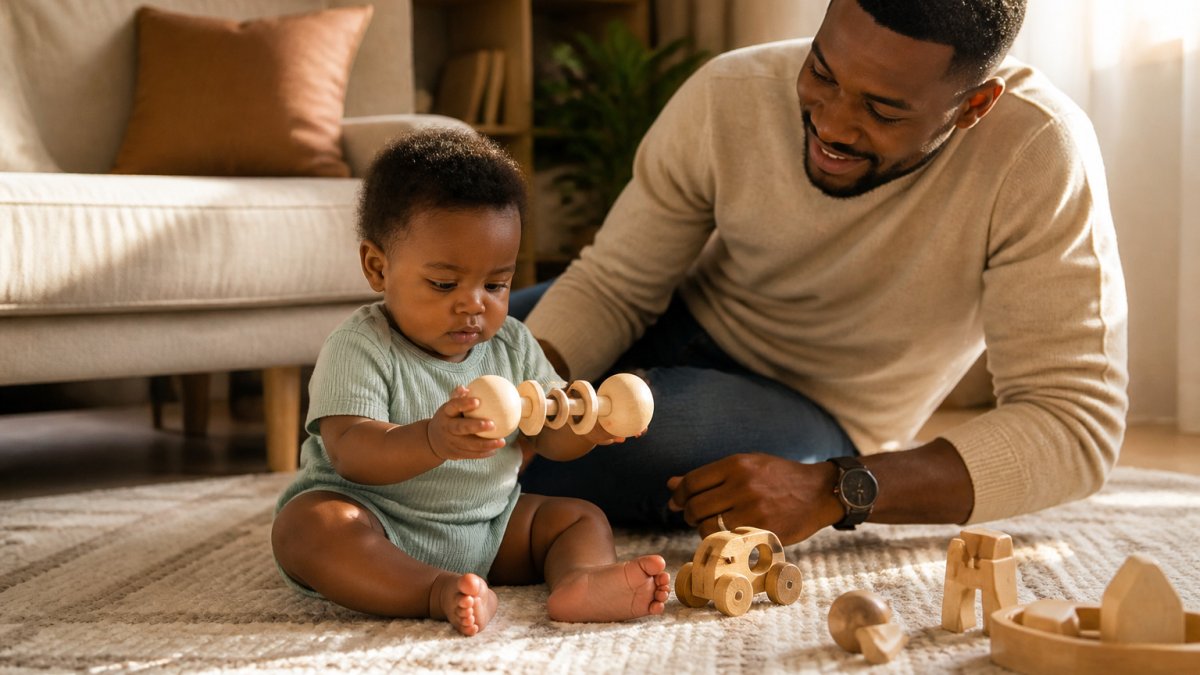
The article lists the materials and toy types that best support sensory development in toddlers.
| Toy type | Key feature | Why it helps |
|---|---|---|
| Wooden rattle | Solid wood | Sounds and feels different from plastic |
| Stacking rings | Open-ended play | Builds imagination and problem-solving |
| Soft fabric tray | Open-ended play | Can be used many ways |
| Textured ball | Gripping and shaking | Supports early sensory exploration |
| Smooth wooden block | Natural material | Gives a baby something to explore by hand |
| Natural rubber toy | Plant-based material | A sustainable material choice |
Checking Toys Are Non-Toxic and Safe for Toddlers
Safety comes first. Check that toys are clearly labelled with materials and the recommended age range. Learn whether sensory play is worth it and what safety points apply. Paints and finishes should be water-based and free from lead where labelled. Small parts pose a choking risk for children under three, so inspect toys for loose pieces before giving them to a toddler.
Always check what a toy is made of before buying. Ask the seller about certification and be cautious of unlabelled products.
Choosing educational toys for older toddlers follows the same principles.
Choosing Your Next Sensory Toy from MasterKids
Our range at MasterKids covers many stages, from soft sensory toys for newborns to building sets for older children. Nationwide delivery means you can order from anywhere in Nigeria and have your toys sent to your door.
For children who enjoy building and hands-on problem solving, building sets are a strong choice. Open-ended bricks can encourage fine motor skills and cause-and-effect learning as children stack and connect pieces. Browse our building and STEM range to see the options.
Prices and delivery times vary by product, quantity and location, so check our website for current details or contact our team for a quote.
Frequently Asked Questions
What are the best eco-friendly toys for sensory development?
Wooden rattles, natural fibre soft blocks, and textured cloth balls are among the most useful choices. They offer varied textures, gentle sounds and easy-to-grip shapes that help babies explore their senses. Look for untreated or responsibly finished wood and natural materials such as cotton or organic fabric. Always check that small parts cannot detach, and pick items suited to your child's current age and stage.
Are wooden toys suitable for babies and toddlers?
Yes, wooden toys are generally suitable when they are smooth, sanded well and finished with non-toxic, child-safe coatings. Their weight and firmness help small hands develop grip and dexterity. Check for splinters, loose joints and sharp edges before every use, and avoid toys with small detachable parts for children who still mouth objects. Inspect them regularly for wear and damage.
Are eco-friendly toys safe for babies who put toys in their mouths?
Many eco-friendly toys are safe for mouthing when they are made from natural, non-toxic materials and finished with safe coatings. Choose larger, one-piece designs that cannot be swallowed or choked on. Wash toys regularly and remove any that are cracked, peeling or damaged. When buying, look for clear information about materials and finishes, and buy from trusted sources to avoid counterfeit products.