 comparison
Why Choose Imported Educational Toys Nigeria: 2026 Guide
Table of Contents
- Why Imported Educational Toys in Nigeria Support Child Development
- Affordable Educational Toys for Schools and Homes
- Best STEM Kits for Kids: Choosing Age-Appropriate Learning Tools
- Frequently Asked Questions
Last Updated: September 12, 2026
Why Imported Educational Toys in Nigeria Support Child Development
Imported educational toys are play items brought in from outside the country that teach a specific skill while a child plays. This MasterKids guide explains why they matter.
The early years shape how a child thinks, solves problems and handles emotions, and good toys let them practise those skills safely before formal schooling.
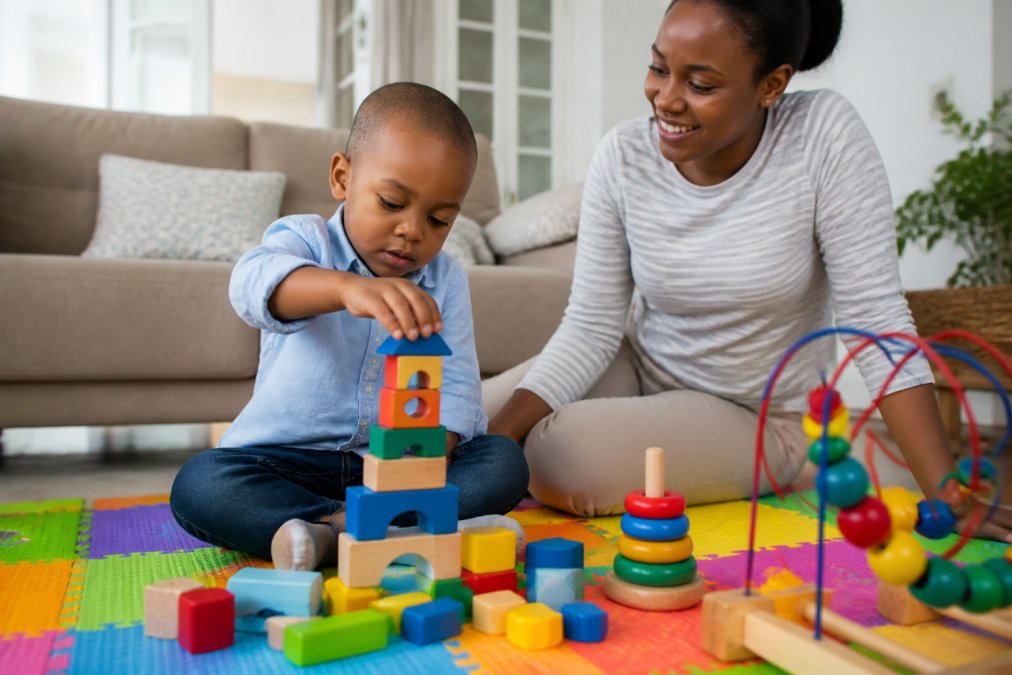
Many parents worry about safety and quality when buying locally. Imported options often carry clearer labelling and tested materials, giving you more confidence in what your child handles.
Affordable Educational Toys for Schools and Homes
Affordable educational toys do not mean low quality. Knowing what drives the price up and what adds real learning value stretches your money, whether for one child or a whole classroom.
What actually pushes the price up
- Import duty and clearing costs. Toys brought in from abroad pass through customs, and those charges sit inside the shelf price.
- Material grade. Solid wood, food-grade silicone and thick, non-toxic ABS plastic outlast thin, brittle plastic.
- Number of play modes. A set that can be built, sorted, counted and rebuilt replaces three single-purpose toys.
- Packaging and branding. Flashy boxes add cost without adding play; plain, sturdy packaging usually means the money went into the toy.
Getting more learning per naira
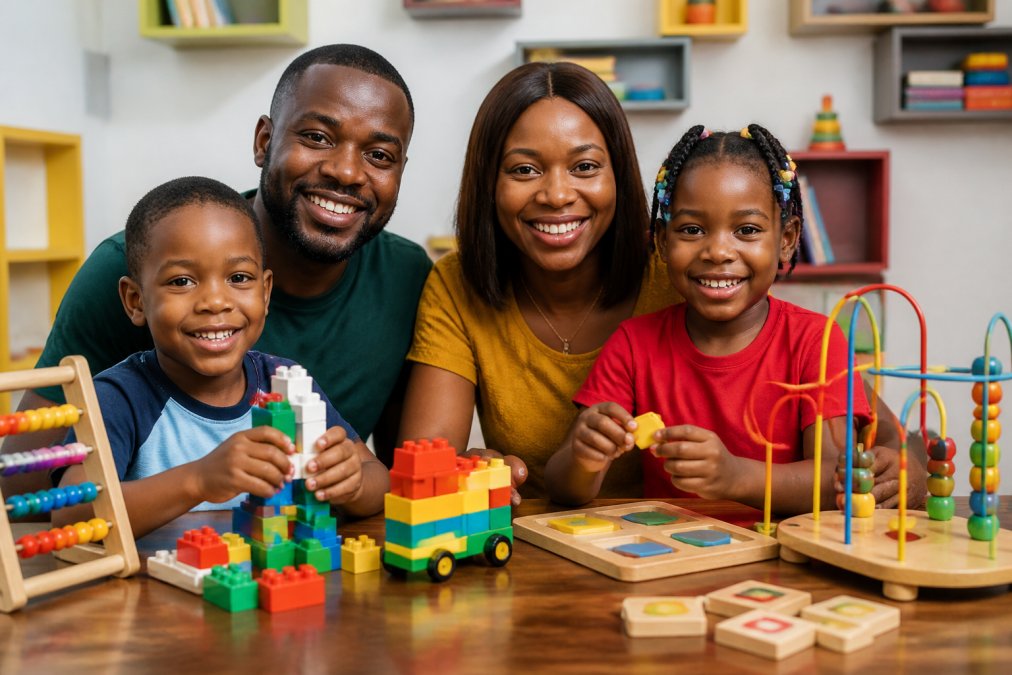
Schools and parents stretch a budget by choosing toys that serve more than one purpose. A good building set teaches counting, colour sorting, patience and spatial reasoning at once, while a stacking ring set covers size ordering, colour naming and fine motor control.
- Choose sets that grow with the child across two or three age bands
- Pick durable materials over flashy packaging
- Buy in bulk for classrooms to lower the cost per child
- Choose open-ended toys that can be rebuilt, so one purchase lasts years
- Check that spare parts are available before committing to a classroom set
MasterKids curates options that balance price with real learning value. Our [PRODUCT: wooden stacking and sorting set] and [PRODUCT: multi-purpose building blocks set] are built for long-term use, and nationwide delivery means schools and homes across the country can order without arranging their own transport.
| What to Check | Why It Matters | What to Avoid |
|---|---|---|
| Age label | Matches the child's stage | Toys marked for older kids |
| Material | Lasts longer, safer to handle | Thin, brittle plastic |
| Learning goal | Builds a real skill | Toys with no clear purpose |
| Spare parts | Extends the life of the set | Sets with no replacements |
| Play modes | More learning per naira | One-time builds |
Best STEM Kits for Kids: Choosing Age-Appropriate Learning Tools
Best STEM kits for kids match a child's current abilities and stretch them just enough. Too hard and the child gives up; too easy and boredom sets in.
Matching the kit to the stage
Toddlers and pre-nursery (roughly 1-3 years). STEM play here is sensory and motor play: chunky stacking rings, shape sorters, nesting cups and large grip blocks, building size ordering, colour and shape naming, and hand-eye coordination.
Nursery and reception (roughly 3-5 years). Children follow two or three step instructions and reason about cause and effect. Simple magnetic tiles, beginner pattern blocks, water and sand play sets, and basic pulley or gear toys build counting, sorting, sequencing and early measurement.
Lower primary (roughly 6-8 years). Real building and simple mechanics come in: construction kits with gears, wheels and axles, basic circuit kits with safe low-voltage components, and beginner coding games using picture blocks.
Upper primary (roughly 9-11 years). Children handle multi-step builds, simple robotics and drag-and-drop coding games, shifting from following instructions to designing and testing their own solutions.
Linking toys to early years curriculum milestones
Teachers often map each toy to a milestone rather than buying by brand. In the early years framework used across most nursery and primary settings, the milestones toys support most directly are:
- Number and counting, one-to-one correspondence, recognising numerals, simple addition with objects
- Shape, space and measure, naming 2D and 3D shapes, comparing length and weight, simple patterns
- Physical development, fine motor control through gripping, threading, stacking and building
- Understanding the world, cause and effect, simple forces, living things and materials
- Communication and language, describing what they built, asking questions, following instructions
When you buy a kit, ask which of these it feeds. A set that hits two or three is worth far more than one that only teaches colour matching.
What to look for in an imported kit
When you choose imported educational toys, look for clear instructions and spare parts. Kits that can be rebuilt keep a child engaged far longer than one-time builds. Check the safety labelling too, reputable imported kits carry recognised toy safety marks and non-toxic material declarations, a strong reason to buy imported rather than unbranded local copies.
Our [PRODUCT: beginner magnetic tiles set] suits the nursery band, while the [PRODUCT: junior mechanics and gears kit] is built for lower primary learners ready for moving parts.
Frequently Asked Questions
What are the benefits of using imported educational toys for child development?
Imported educational toys often undergo stricter safety testing and use non-toxic materials, supporting cognitive, motor and social-emotional development. They are designed with clear learning goals, such as problem-solving and creativity, and tend to be more durable, giving better long-term value for families and schools in Nigeria.
How do imported STEM kits compare to local alternatives?
Imported STEM kits usually follow established pedagogical frameworks and come with detailed guides, making them easier to align with early years foundation goals. Local alternatives can be more affordable, but quality varies. When choosing, check for child-safe certification and age-appropriate design. MasterKids offers curated STEM kits that balance safety, learning value and cost.
What should parents look for when buying imported learning resources?
Look for non-toxic materials, age-appropriate labels, and certification marks. Consider durability, ease of cleaning, and whether the toy supports open-ended play. For schools, check if the resource aligns with the curriculum. MasterKids selects products that meet these standards, so you can shop with confidence.
Finding toys that are safe, durable, and genuinely educational takes some care, but it is worth the effort for your child's development. MasterKids offers a curated range of safe, high-quality toys, STEM kits, and educational resources for every stage from newborn to teen, with nationwide delivery across Nigeria. Get started with MasterKids and give your child learning tools that inspire big dreams.