 comparison
Preparing Young Minds for the Future Through Play
Table of Contents
- Why Preparing Young Minds for the Future Starts With Play
- How Play Builds Cognitive Growth and Executive Function
- The Benefits of STEM Kits for Children in Building Future-Ready Skills
- Affordable Educational Toys for Schools and Homes That Deliver Real Value
- Digital Literacy in Early Childhood: Balancing Screens and Hands-On Play
- Neurodiversity-Inclusive Play Strategies for Every Child
- How to Choose Authentic Educational Toys That Support Learning
- Conclusion: Helping Children Learn Through Play for Authentic Development
- Frequently Asked Questions
Last Updated: September 21, 2026
Why Preparing Young Minds for the Future Starts With Play
Preparing young minds future is not about flashcards or rushing children to grow up. It is about giving them space to explore, question, and build thinking skills for a world none of us can fully predict. Play is how young children do that work.
This guide from MasterKids looks at how play shapes learning and how to choose toys that support development at home and in school.
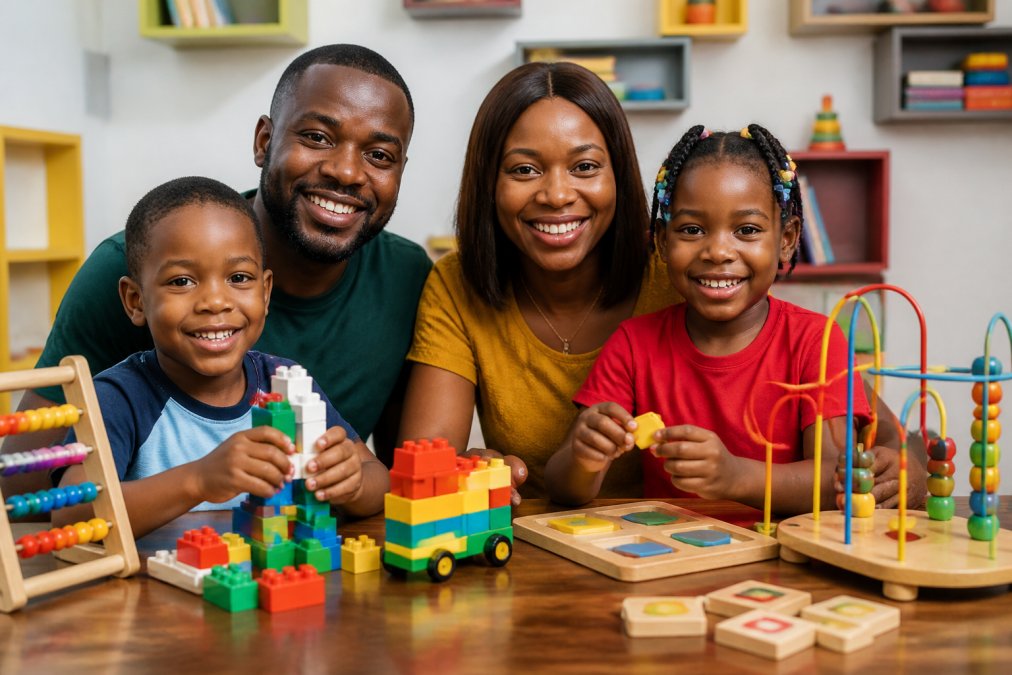
Many parents worry that play is the opposite of learning. The opposite is true. A child building a tower, sorting colours, or pretending to run a shop is practising memory, language, and problem-solving at once.
The jobs of tomorrow will reward curiosity, creativity, and adaptability, and a young minds future depends on children who enjoy learning and carry that mindset for life.
How Play Builds Cognitive Growth and Executive Function
Play builds cognitive growth through repeated, low-pressure chances to plan, adjust, and try again. Executive function, working memory, self-control, and flexible thinking, develops fastest when children are actively engaged rather than watching.
In a simple game of stacking blocks, a child holds a goal in mind, resists knocking everything down, and changes approach when the tower topples, executive function in action.
A few everyday examples show how this works:
- Pretend play: A child acting as a shopkeeper practises language, turn-taking, and planning.
- Puzzles: These build patience and the ability to hold several pieces of information at once.
- Sorting games: Grouping by colour, shape, or size strengthens early reasoning.
- Building sets: These reward trial and error, which is how children learn to solve problems.
The science behind this is well established. The early years are when the brain forms connections at its fastest rate, and rich, hands-on experiences shape that growth. The UNICEF early childhood development guidance explains how nurturing, play-based interaction supports healthy brain development.
What most guides miss is that the quality of interaction matters more than the toy itself. A cheap set of cups and a parent who plays along beats an expensive gadget left on a shelf.
The Benefits of STEM Kits for Children in Building Future-Ready Skills
The benefits of STEM kits for children come down to one thing: they turn abstract ideas into something a child can touch. A kit that asks a child to build a simple circuit or a moving model teaches cause and effect, patience, and the confidence to keep trying when the first attempt fails.
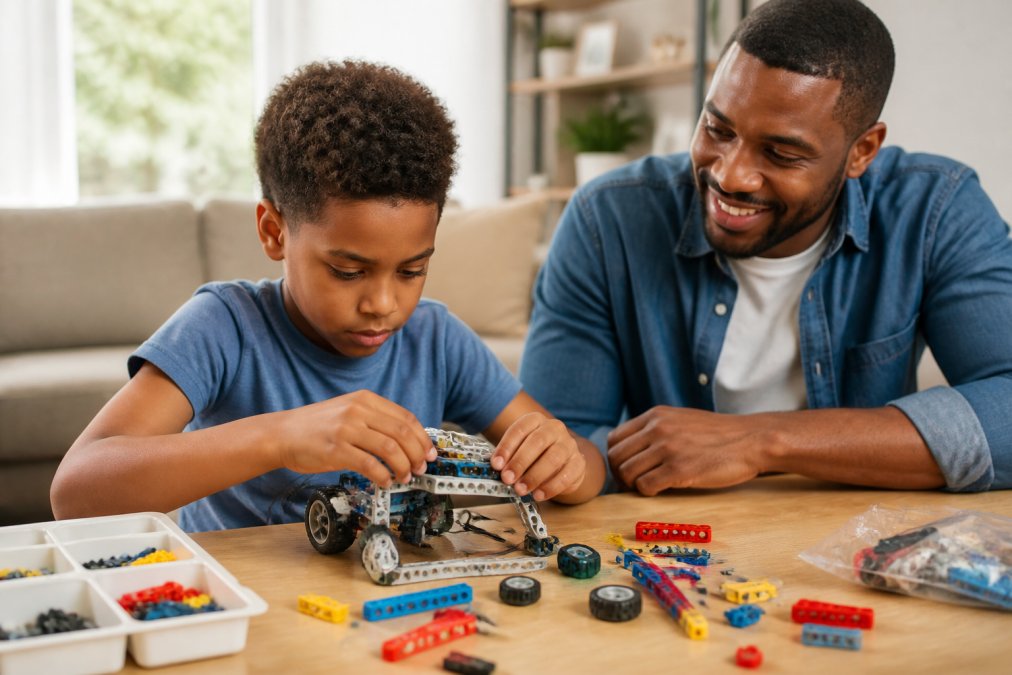
These kits also introduce the language of science and engineering early. Words like "test," "build," and "fix" become normal parts of play. That early comfort with problem-solving skills pays off when schoolwork gets harder.
For older children, robotics and coding kits take this further. They learn that mistakes are information, not failure, one of the best gifts for a child heading into an uncertain future.
Affordable Educational Toys for Schools and Homes That Deliver Real Value
Affordable educational toys for schools and homes do not have to mean lower quality. The best value comes from toys that are open-ended, durable, and matched to a child's stage of development.
Open-ended toys, like blocks, magnetic tiles, and art materials, can be used in many ways, so they stay interesting for years and offer better value than a single-purpose toy that loses appeal in a week. Teachers prefer them too, because one set can serve a whole classroom.
When you are comparing options, focus on these points:
- Age match: A toy that is too advanced frustrates a child; one that is too simple bores them.
- Durability: Well-made toys survive daily use and can be passed down.
- Safety: Look for smooth edges, non-toxic finishes, and no small parts for children under three.
- Learning value: Does the toy invite thinking, or does it do all the work for the child?
Schools and parents both benefit from buying fewer, better toys. A small collection of quality items supports more learning than a large pile of fragile ones.
Digital Literacy in Early Childhood: Balancing Screens and Hands-On Play
Digital literacy in early childhood is not about banning screens or handing over a tablet and hoping for the best. It is about teaching children to move between screens and hands-on play with purpose, so each strengthens the other. Most guides stop at "limit screen time," which is too vague to act on. Parents and teachers need a simple framework for deciding when a screen helps and when it replaces the play that builds focus, language, and problem-solving.
A useful way to think about it is the three-question check:
- Is the screen doing something hands-on play cannot? Video calling a grandparent, looking up a picture of a volcano, or using an interactive phonics app all add something. Passive video loops rarely do.
- Is there a hands-on follow-up? If a child watches a clip about building a bridge, the learning sticks when they then try to build one with blocks or a construction kit. The screen becomes the spark, not the whole fire.
- Is an adult nearby some of the time? A child who talks through what they are seeing with a parent or teacher gets language and reasoning practice on top of the content. A child alone with a screen gets neither.
Families who get this right treat screens as one tool among many, not a default.
For parents choosing products, the same principle applies. A toy that invites open-ended building, sorting, or pretending will always earn its place on the shelf. A toy that only works with a screen and does all the thinking for the child will not. At MasterKids, our range is chosen with that balance in mind, so hands-on play that supports digital literacy is always within reach.
Neurodiversity-Inclusive Play Strategies for Every Child
Neurodiversity-inclusive play starts with a simple truth: children do not all engage with the world in the same way, and that is not a problem to be fixed. Some thrive in noisy group play; others need quiet, predictable activities to feel secure enough to explore. Inclusive play needs no special equipment or diagnosis, just flexibility and a willingness to follow the child's lead.
- Open-ended building sets: Blocks, magnetic tiles, and construction kits can be used at many levels, so a child can start simple and add complexity as they are ready.
- Sensory play items: Water tables, sand trays, and textured balls give children a way to regulate while they explore.
- Quiet, focused activities: Puzzles, threading, and sorting games offer calm, predictable play for children who need a break from noise.
- Movement-friendly toys: Ride-ons, balance boards, and soft play shapes let children who need to move stay engaged.
How to Choose Authentic Educational Toys That Support Learning
Choosing authentic educational toys comes down to checking the product, not just the label. Counterfeit and low-quality items are a real concern, and they often fail on safety and durability.
- Does the toy match my child's age and stage?
- Are the materials safe, with no sharp edges or loose small parts?
- Is the seller reputable, with clear product information?
- Does the toy invite open-ended play rather than a single outcome?
- Is it durable enough to survive daily use?
- Does it come with a clear return or replacement policy?
Conclusion: Helping Children Learn Through Play for Authentic Development
Helping children learn through play is one of the most effective things a parent or teacher can do. The toys you choose matter, but the intent behind them matters more. Pick items that invite thinking, match your child's stage, and hold up to daily use.
Frequently Asked Questions
How does play-based learning support long-term cognitive development?
Play-based learning strengthens brain architecture by letting children practise problem-solving, language and social skills in real situations. When a child builds with blocks or plays a matching game, they develop executive function and working memory. These foundational skills support academic readiness later. Research in developmental psychology shows that child-led play builds neural pathways that support lifelong learning, more effectively than rote memorisation alone for young children.
What are the benefits of STEM kits for children in preparing them for the future?
STEM kits for children introduce early science, technology, engineering and maths ideas through hands-on activities. They build curiosity, creativity and problem-solving skills. A child assembling a simple circuit or building a model learns to test ideas and adjust when something fails. These experiences develop the kind of future-ready thinking that supports academic success and confidence in a changing world.
How can parents integrate educational toys into daily routines?
Start small. Keep a basket of affordable educational toys near the kitchen so your child can play while you cook. Use bath time for pouring and measuring toys. During travel, pack a puzzle or building set instead of a screen. Ten to fifteen minutes of focused play each day builds foundational skills without adding pressure to your schedule. Consistency matters more than long sessions.
What makes a toy authentic for developmental learning?
An authentic educational toy is safe, age-appropriate and open-ended. It invites your child to explore, create and solve problems rather than just watch. Look for toys that match developmental milestones, use non-toxic materials and come from trusted sellers who follow safety standards. Counterfeit or low-quality items often break easily and may not meet safety requirements, so buy from reputable sources.