 ultimate-guide
Benefits of Unstructured Play for Child Development
Table of Contents
- What Unstructured Play Means for Your Child
- How Unstructured Play Builds Cognitive Development
- Social and Emotional Skills Through Play Based Learning Activities
- How to Encourage Independent Play at Home
- Choosing Educational Toys for Creative Play
- Unstructured Play in a Digital Age
- Making Unstructured Play Work in Small Spaces
- Conclusion
- Frequently Asked Questions
Last Updated: September 19, 2026
What Unstructured Play Means for Your Child
Unstructured play is child-led activity with no fixed rules, goals, or adult direction, where children choose what to do, how to do it, and when to stop. At MasterKids, we call it play that belongs to the child, not to a timetable.
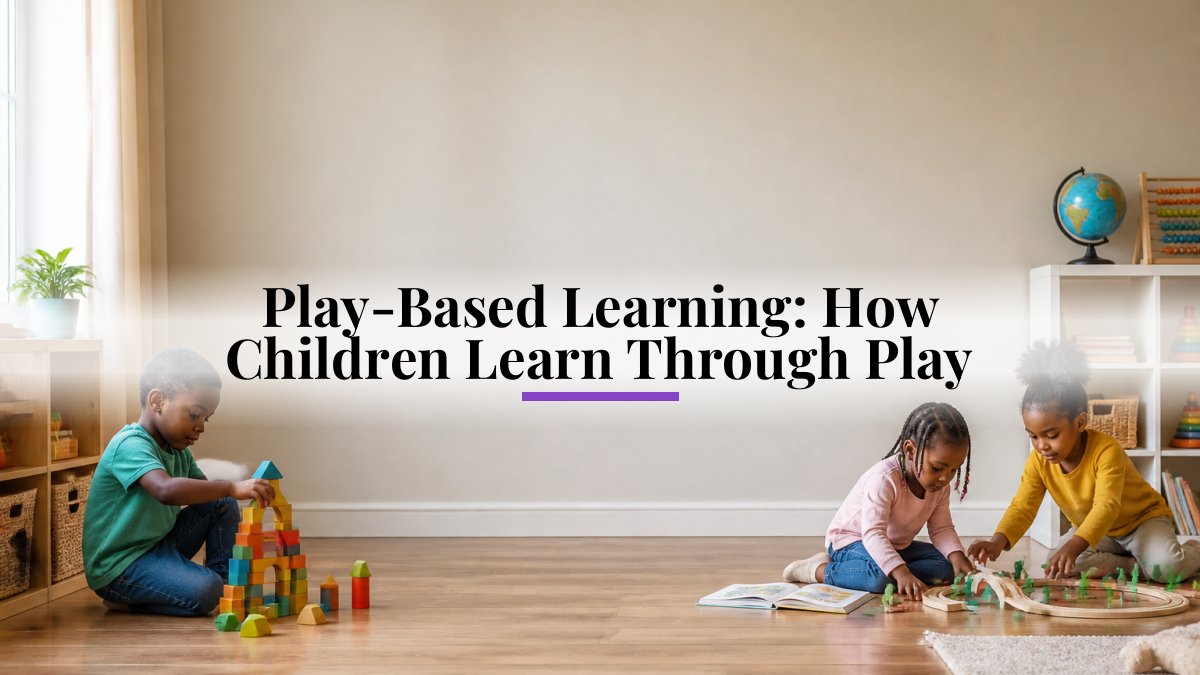
Picture a four-year-old stacking cups into a wobbly tower, knocking it down, and rebuilding it taller. She is testing balance, cause and effect, and her own patience. That is unstructured play in action.
The benefits of unstructured play for child development show up across thinking, feeling, movement, and relationships. Free play builds cognitive development, social-emotional learning, motor skills, and resilience at once, training the whole child together.
Many children today move from school to lessons to screens with almost no free play in between. This guide from MasterKids breaks down what unstructured play builds, why it is disappearing, and how to bring it back into a normal family day.
How Unstructured Play Builds Cognitive Development
Cognitive development through play happens when a child invents the game, not just follows it. With no rulebook, the brain plans, predicts, and adjusts in real time. That is why free play does something a worksheet cannot.
Take a child building a pretend market stall from cartons. She decides what to sell, sets imaginary prices, and works out how many items she needs. That is problem-solving dressed up as fun, and it strengthens executive function: holding a plan in mind, ignoring distractions, and switching tasks. Regular child-led play can help children develop stronger working memory and mental flexibility by the time they start primary school.
Imaginative play pushes this further. A cardboard box becomes a car, a boat, then a house. Each switch asks the child to hold two ideas at once and choose between them, building creative thinking and cognitive flexibility, the ability to shift attention and rules without falling apart.
There is a quieter cognitive gain parents often miss: language. When children narrate their own play, they practise sequencing, vocabulary, and storytelling. A child who explains why the tower fell is doing early cause-and-effect reasoning out loud.
What most guides miss is that the mess matters. A child allowed to leave the tower half-built and return later is practising self-regulation. The pause is part of the learning.
Unstructured Play and Neurodivergent Children
For neurodivergent children, including those with autism, ADHD, or sensory processing differences, unstructured play is especially valuable because the child sets the pace and the rules.
A common pattern is that neurodivergent children use free play to regulate sensory input. A child who lines up toys for twenty minutes may be organising a chaotic sensory world into something predictable, and a child who spins or rocks may be self-regulating, not misbehaving. When adults interrupt to redirect that play, the regulation stops.
Unstructured play also gives neurodivergent children a low-pressure space to practise social skills on their own terms. Instead of a structured group game with unwritten rules, two children can build side by side, then gradually negotiate, which is often easier than a loud, fast-paced group activity.
For parents, watch what the play is doing for the child, not what it looks like. If it is calming, organising, or joyful, it is working. If it escalates into distress, step in gently.
What This Means for School Readiness
The cognitive benefits of unstructured play show up in the classroom as attention, patience, and the ability to try again after failure. A child who has spent years inventing games has already practised holding a goal in mind, ignoring distractions, and recovering from setbacks, the same skills a teacher asks for on the first day of primary school.
Protecting play time is not taking time away from learning. It is building the foundation formal learning sits on.
Social and Emotional Skills Through Play Based Learning Activities
Play based learning activities teach social skills faster than instruction because children negotiate in real time. Two children sharing a pretend kitchen must agree who cooks, who serves, and what happens when the food runs out.
That is conflict resolution in miniature. Nobody hands out a script. The children work out turns, rules, and roles themselves, learning to read faces and tone along the way.
How to Encourage Independent Play at Home
Independent play grows from small, deliberate steps, not from leaving a child alone and hoping for the best. Most families can build it in a few weeks.
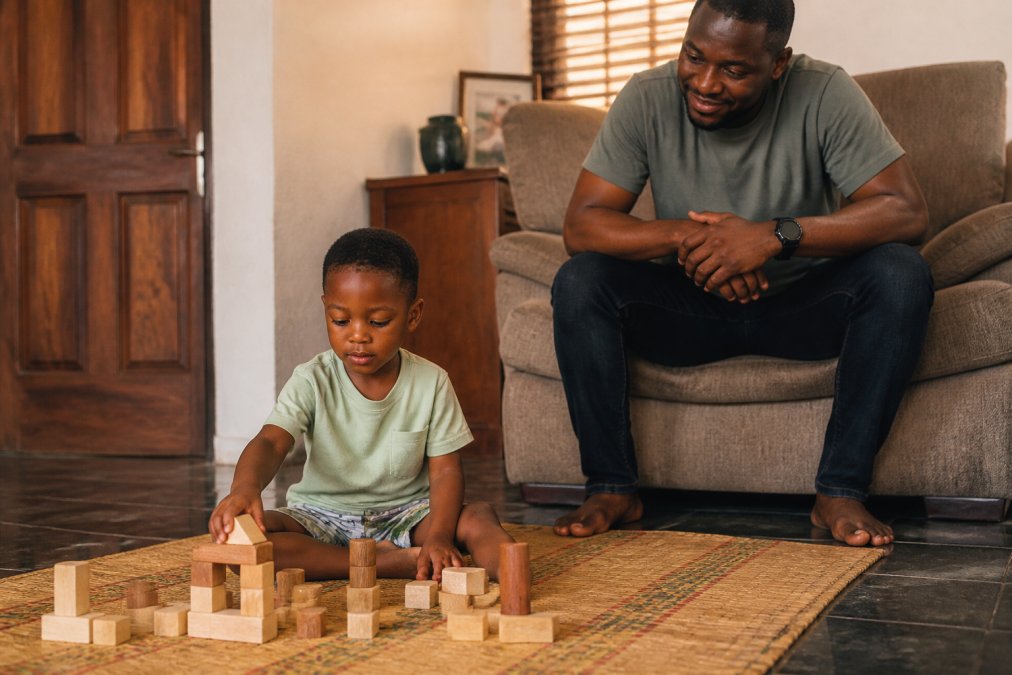
Here is a simple routine that works:
- Start with ten minutes. Set a short, low-pressure window with no screens and no instructions.
- Set up the space, then step back. Put two or three open-ended toys within reach and sit nearby without joining in.
- Resist the urge to direct. If your child asks what to do, answer with a question: "What do you think the blocks want to be?"
- Let boredom do its work. A minute or two of "I'm bored" usually ends in a game your child invents.
- Praise the effort, not the outcome. "You kept trying even when it fell" beats "Good job."
Choosing Educational Toys for Creative Play
Educational toys for creative play do one thing well: they leave room for the child to decide. The best pick is often the plainest.
| Toy type | Best for | Why it works |
|---|---|---|
| Wooden blocks | Ages 1-5 | Endless building, no fixed answer |
| Pretend food sets | Ages 2-6 | Sparks role play and negotiation |
| Sand and water tools | Ages 2-5 | Sensory exploration, cause and effect |
| Open-ended STEM kits | Ages 6+ | Trial-and-error problem-solving |
| Art and craft supplies | Ages 3+ | Free choice, creative thinking |
Unstructured Play in a Digital Age
Screens are the biggest barrier to free play in most homes, and the problem is not the screen itself but what it replaces. Every hour of passive watching is an hour not spent moving, pretending, or negotiating with a sibling. Screens end boredom instantly, which is hard to argue with, but passive entertainment asks nothing of the child, so nothing gets built.
The Play Window Method
Instead of banning screens outright, protect one block of the day as screen-free and let the child choose what to do with it. A workable start is thirty to sixty minutes after school or the midday meal, before screens are switched on at all.
Here is how to make it stick:
- Pick the same window every day. Predictability reduces the argument. The child knows when screens are off and when they return.
- Put the screens out of sight, not just off. A tablet on the table is an invitation. A tablet in a drawer is not.
- Have the play materials already out. A basket of blocks or a mat with toys removes the "there is nothing to do" stall.
- Expect a rough first week. Most families find the first few days are full of complaints and the second week is easier. That pattern is normal.
- Do not fill the silence with instructions. Your job is to hold the boundary, not to run the game.
The Over-Scheduling Trap
A second barrier gets less attention: over-scheduling. When every afternoon is filled with lessons, clubs, and structured classes, unstructured play has nowhere to fit. Free play should be the first thing on the calendar, not the last.
A Note on Quality, Not Just Quantity
Not all screen time is equal, and not all free time is play. A child scrolling short videos is not the same as one video-calling a grandparent or looking up how to build a cardboard castle. The goal is not to eliminate screens, but to stop them being the default filler for every quiet moment.
Bringing It Back to the Family Day
You do not need a perfect routine. One protected window, a few open-ended toys within reach, and the willingness to let boredom do its work are enough to bring unstructured play back into a normal family day, even where screens are part of everyday life.
Making Unstructured Play Work in Small Spaces
Small homes do not block unstructured play, but they change how it looks. A child does not need a garden to build a world.
Conclusion
The hardest part of unstructured play is not the play itself. It is stepping back and letting your child lead, even when the game looks messy or pointless.
Frequently Asked Questions
What are the benefits of unstructured play for children's development?
Unstructured play builds cognitive, social, emotional, and physical skills. It strengthens problem-solving, creativity, and self-regulation as children direct their own activity. Research links free play to better executive function, resilience, and mental health. It also supports language through peer interaction and helps children manage stress. Unlike adult-led activities, it lets children set the pace, make decisions, and learn from natural consequences in a safe environment.
What is the difference between structured and unstructured play?
Structured play has rules, goals, and adult direction, such as a coached football session or a guided craft class. Unstructured play is child-directed: the child chooses what, how, and how long to play. Both have value, but unstructured play gives more room for imagination, intrinsic motivation, and autonomy. A healthy balance includes plenty of free time for child-led activity alongside some organised learning.
How can parents encourage more unstructured play at home?
Start by offering open-ended toys like blocks, dolls, art supplies, and building sets rather than single-purpose gadgets. Set aside daily free-play time with no screens. Create a safe corner indoors or a balcony area where your child can explore. Resist the urge to direct or correct; let them lead. Rotate toys to keep interest high, and join in only when invited. Simple changes build lasting habits.
Can unstructured play improve academic performance?
Yes, indirectly. Free play strengthens executive function, attention, and self-regulation, which are foundations for learning. Children who play freely often show better problem-solving and creative thinking, skills that support schoolwork. It also reduces stress, helping children focus. Unstructured play does not replace formal learning, but it builds the mental and emotional capacity that makes classroom learning more effective.