 how-to
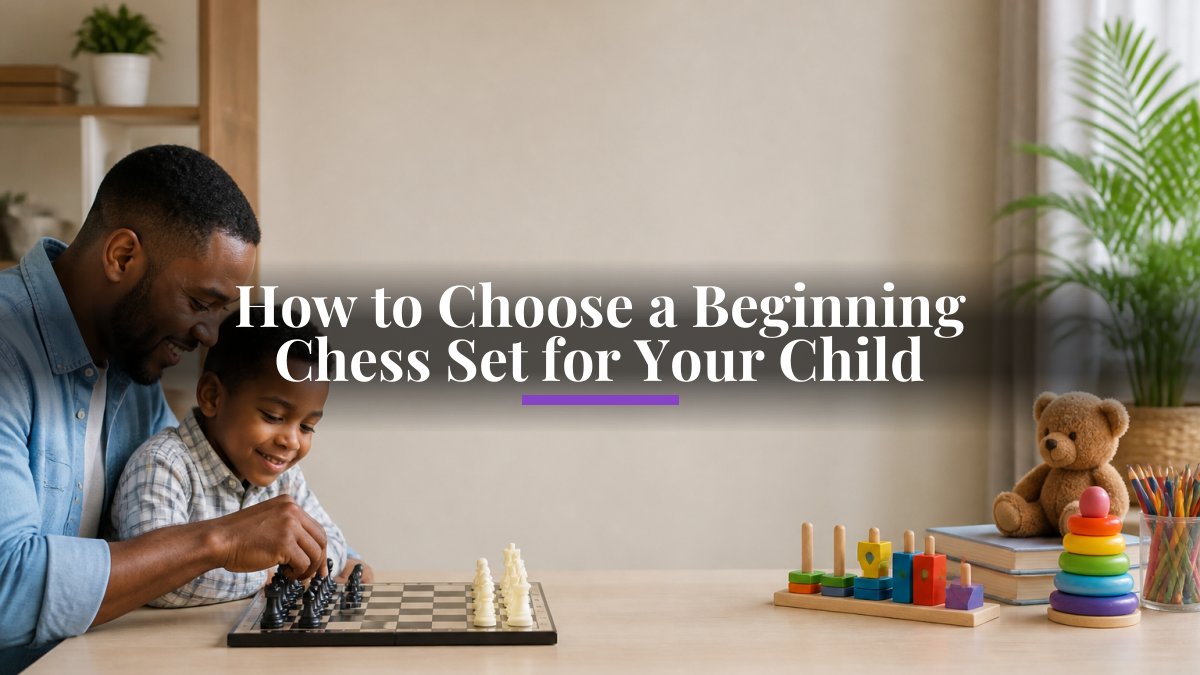
How to Choose a Beginning Chess Set for Your Child
Last Updated: October 29, 2026
Quick Summary
Choose a beginning chess set with a king around 7.5 cm to 9.5 cm tall, weighted pieces, and squares about 4 cm to 5 cm wide. It should include 32 pieces plus a spare queen, and plastic sets survive drops best for children.
- The king should stand roughly twice the width of one square.
- A light square goes in each player's right-hand corner.
- Themed sets draw children in, but busy designs can confuse pieces.
- Travel sets with magnetic pieces and a folding board suit families on the move.
- A standard tournament set uses a 9.5 cm king and a roll-up vinyl board.
Table of Contents
- What to Look for in a Beginning Chess Set
- How to Set Up the Board and Pieces Step by Step
- Educational Benefits of Chess for Children
- Frequently Asked Questions
What to Look for in a Beginning Chess Set
A beginning chess set balances piece size, board clarity, and durability so a child can learn without frustration. Look for a king around 7.5 cm to 9.5 cm tall, weighted pieces, squares about 4 cm to 5 cm wide, and 32 pieces plus a spare queen. For age matching, safety, and durability, see choosing toys for different ages, how to identify safe educational toys for kids, and durability tips for children's toys.

Types of Chess Sets: Plastic, Wooden, Themed, and Travel
Plastic sets survive drops; wooden sets feel grown-up but chip if mistreated; themed sets draw children in, though busy designs can confuse pieces; travel sets with magnetic pieces and a folding board suit families on the move.
King Height, Square Size, and Board Orientation
The king should stand roughly twice the width of one square, and a light square goes in each player's right-hand corner.
Here are the key specifications to check when choosing a beginning chess set.
| Item | Value | Note |
|---|---|---|
| King height | 7.5 cm to 9.5 cm | Roughly twice the width of one square |
| Square size | About 4 cm to 5 cm wide | Light square in each player's right-hand corner |
| Pieces | 32 pieces plus a spare queen | Weighted pieces preferred |
| Plastic sets | Survive drops | Durable option for children |
| Wooden sets | Feel grown-up | Chip if mistreated |
| Themed sets | Draw children in | Busy designs can confuse pieces |
| Travel sets | Magnetic pieces, folding board | Suit families on the move |
| Tournament set | 9.5 cm king, roll-up vinyl board | Buy once your child joins a school club |
How to Set Up the Board and Pieces Step by Step
Setting up is quick and simple:
- Place the board correctly. A light square goes in each player's right-hand corner.
- Fill the second rank with pawns. All eight go in front of each player.
- Put the rooks in the corners. The castle-shaped pieces on the far left and right.
- Place the knights next to the rooks. The horse-headed pieces sit inside the corners.
- Add the bishops beside the knights. The pieces with the pointed mitre go next.
- Set the queen on her own colour. White queen on light, black queen on dark.
- Place the king on the remaining square. The king always sits beside the queen.
- Check you have 16 pieces per side. Count them together the first few times.
If you want a printed reference, the official FIDE laws of chess show the standard starting position and confirm the light-square-right rule.
Educational Benefits of Chess for Children
Chess builds memory, patience, and planning through play, and learning to lose gracefully is a lesson worth more than any worksheet. Play short games, let them win sometimes, and ask questions instead of giving answers; ten minutes a day beats an hour once a week. UNICEF's guidance on learning through play explains why play-based learning shapes early development so strongly. For the wider picture, our article on play-based learning and how children learn through play connects chess to that research, and the five pillars of early childhood development shows how play, care, and nutrition work together as your child grows.
Tournament-Style Sets and Moving On
A standard tournament set uses a 9.5 cm king and a roll-up vinyl board; once your child joins a school club, buy one so home matches competition.
Care, Storage, and Maintenance
Store pieces in a cloth bag or the box, keep wooden boards away from sun and damp, and wipe plastic pieces with a damp cloth rather than soaking them.
Finding a chess set your child will use is about pieces small hands can hold, a clear board, and materials that survive real life with children. MasterKids offers a curated range of educational toys and games, with nationwide delivery across Nigeria. Browse our collection, pick a set that matches your child's age, and start with the setup checklist above. Get started with MasterKids and give your child a game they can grow with.
Frequently Asked Questions
What features should I look for in a beginning chess set?
Look for a set with a king that sits comfortably in small hands. Choose a board with clear light and dark squares, and pieces that are weighted so they do not topple easily. Check that the set includes a full complement of 32 pieces.
Are wooden or plastic chess sets better for beginners?
Plastic sets are often a practical choice for young beginners, as they tend to withstand knocks. Once your child plays regularly, a sturdier set with weighted pieces may suit them better. Consider how your child handles toys before deciding.
How does playing chess benefit a child's cognitive development?
Chess asks children to plan ahead, weigh options and remember patterns, which supports concentration and problem-solving. The educational benefits of chess for children include improved patience, turn-taking and the habit of thinking before acting. These gains come from regular, relaxed play rather than pressure to win. Start with short games and let your child enjoy the pieces and the board before introducing rules in full.